
















India gears up for next space exploration phase with Gaganyaan to Venus mission
text_fields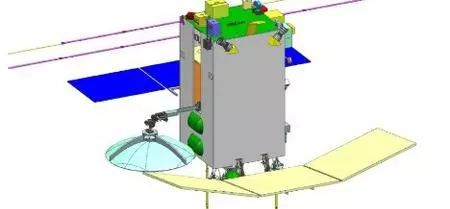
Photo: IANS

New Delhi: The next space exploration phase will deepen India’s role in human spaceflight, planetary exploration and advanced space technology as these efforts will support India’s ambition to become a leading global space power, according to the government.
An official fact-sheet states that India is entering a new phase of human spaceflight, deep-space exploration and advanced space infrastructure, IANS reported.
Upcoming missions will build capabilities for sustained human presence and complex orbital operations.
The Gaganyaan human spaceflight programme was approved in January 2019. Its scope was expanded and revised in September 2024 to a total outlay of Rs 20,193 crore encompassing 8 total missions — including precursor flights for the Bharatiya Antariksh Station (BAS-01).
It aims to launch a crew of three Indian astronauts to a 400-km orbit for a three-day mission. The first uncrewed experimental mission to validate various technologies including Vyommitra half-humanoid is targeted in Q4 of 2026. The crewed mission is targeted for 2027, the factsheet observes.
India’s planned five-module space station Bharatiya Antariksh Station (BAS). It is targeted for operationalisation by 2035, with BAS-01 planned for launch by 2028. It will support long-duration human spaceflight, microgravity research and advanced space operations.
Notably, SPADEX-2 and SPADEX-3 missions are being studied to advance orbital docking technologies for future Chandrayaan-4, Gaganyaan and BAS missions.
They will enable capabilities such as spacecraft docking, sample transfer, crew transfer and power, fluid and propellant transfer.
Targeted for launch in March 2028, the Venus Orbiter Mission will study Venus’ geology, atmosphere, and ionosphere. It will demonstrate advanced aerobraking and thermal-management technologies.
Moreover, ISRO is developing a 200-tonne thrust semi-cryogenic engine. It will enable more powerful launch vehicles and higher payload capacity.
A semi-cryogenic booster stage is being developed for the Launch Vehicle Mark-3 (LVM3). It will significantly enhance LVM3’s payload-carrying capability. ISRO is demonstrating booster recovery using Vertical Take-off and Vertical Landing (VTVL) technology. This will enable rocket-stage reusability and reduce future launch costs.
The space agency is also developing a partially reusable Next Generation Launch Vehicle (NGLV) using LOX-Methane propulsion. It will provide greater payload capability and support frequent, cost-effective launches, says the fact sheet.
ISRO is developing a winged Orbital Re-entry Vehicle for the Reusable Launch Vehicle (RLV) programme. It will demonstrate orbital re-entry and runway landing for reusable space transportation.
The space agency is developing air-breathing propulsion and a technology demonstrator vehicle. This technology could enable more efficient atmospheric flight and advanced reusable launch systems.