

















‘Constitutional rights cannot be eclipsed’: HC awards ₹25 lakh to sisters confined after embracing Islam
text_fields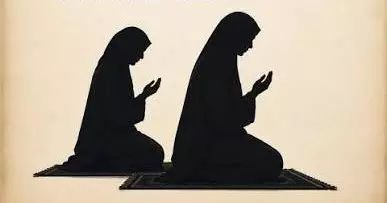

The two adult sisters who had been under the confinement of their father, with the tacit support of UP State machinery, for embracing Islam of their own free will have seen the Allahabad High Court order their father and the state to pay them Rs 25 lakh, holding that constitutional rights cannot be eclipsed by parental authority, social morality, or majoritarian sentiment.
In a significant habeas corpus judgment, Justice Sandeep Jain held that the women, identified as Diya Bhatia, who has adopted the name Zoya Diya Bhatia, and Anshu Bhatia, who has adopted the name Amina Anshu Bhatia, possess an inviolable constitutional right to determine the course of their own lives. Instead of taking steps to secure their release, the State allowed their father to keep them in confinement, which, in turn, amounted to an “ostensible cover” for criminal proceedings.
The court found that the women, aged about 20 and 35, had been deprived of their liberty for a prolonged period since 2021.
The court, which heard the sisters directly after ordering their physical appearance before it, heard that the sisters had voluntarily renounced Hinduism and embraced Islam in 2020, and the women wished their marriages to be solemnised according to their wishes. However, their father approached the police and lodged a kidnapping case against them, following which provisions of the UP Prohibition of Unlawful Conversion of Religion Act, 2021, were added to the FIR.
The court also slammed the State, whose contention that the sisters’ conversion to Islam was part of a larger conspiracy threatening the sovereignty, integrity, or unity of the country was rejected for want of supporting material, observing that mere apprehension could not replace legally admissible evidence when fundamental rights were at stake.
During their interaction with the women, both consistently maintained that their decision to embrace Islam arose from spiritual satisfaction, peace of mind, and freedom of conscience. The court found no material indicating coercion, undue influence, fraud, allurement, or any other circumstance that could invalidate their choice.
It emphasised that adulthood carries with it decisional autonomy, encompassing the freedom to choose one’s faith, residence, and the person with whom one wishes to live. These freedoms, it said, form integral facets of the right to life and personal liberty under Article 21 and freedom of conscience under Article 25 of the Constitution.
The court declared the sisters free to live wherever and with whomever they choose, without interference from their father or State authorities, while their father was ordered not to interfere with their liberty, movement, residence, profession, or religious choices.
The father and the Uttar Pradesh government were held jointly and severally liable to pay ₹25 lakh, to be divided equally between the sisters, within eight weeks. The court further directed the State to recover 50 per cent of the compensation from the father and the remaining 50 per cent from any public servant whose acts or omissions contributed to the unconstitutional deprivation of the women’s liberty, subject to due process.
It also ordered the return of their passports, educational certificates, identity documents, bank records, conversion documents, and other personal belongings.