













Election Commission data shows voter deletions were fast, additions slow in Bengal
text_fields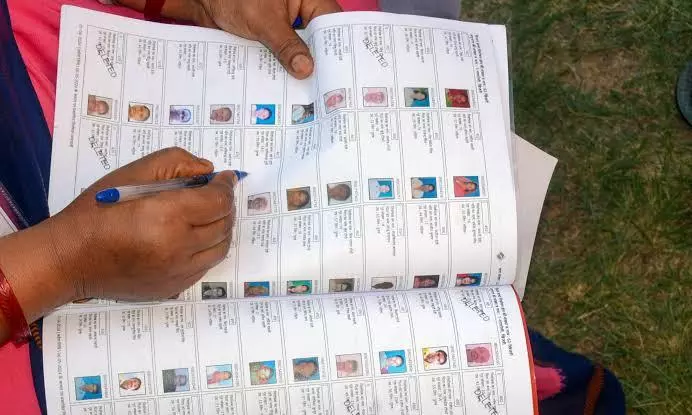

A constituency-level data submitted by the Election Commission to the Supreme Court shows how sheer the Commission was in processing voter deletions while remaining lethargic in the addition process, with 97.54 per cent of Form 7 requests seeking exclusion accepted or resulting in an electoral roll update, while only 49.83 per cent of Form 6 applications seeking inclusion had reached an accepted outcome among cases with a recorded decision in West Bengal.
The Commission’s submission through a counter-affidavit in the Supreme Court came after the Court issued a notice on a public-interest petition filed by Congress leader Prasenjit Bose, seeking details of pending appeals and additions and deletions in the electoral rolls, The Wire reported.
The figures are contained in Annexures R/1 and R/2, covering claims and objections received across West Bengal between December 17, 2025 and August 7, 2026, and show a striking disparity in the way applications for addition and deletion were processed.
During this period, out of 34,13,481 Form 6 applications for inclusion in the electoral roll, only 7,07,606 resulted in the electoral roll being updated and another 14,079 were marked as accepted, while 7,26,660 were rejected and 4,86,395 remained unprocessed, meaning that only 20.73 per cent of the applications resulted in an addition to the electoral roll.
Contrary to Form 6, Form 7 applications for deletion had received particular urgency and care, as out of 6,39,049 applications seeking deletion, 5,72,330 had resulted in the roll being updated and only 14,506 were rejected, meaning 5,86,836 applications, or 91.83 per cent, had reached a completed outcome, with 97.53 per cent of those decided cases resulting in exclusion.
A Form 7 application was therefore 2.19 times as likely as a Form 6 application to have reached a completed outcome, while, measured against all applications received, it was 4.32 times as likely to have produced the requested change in the electoral roll.
Of the 22,26,101 people projected to be aged 18 or 19 or first-time voters in West Bengal in 2026, only 5,23,229 were on the electoral roll, meaning that just 23.5 per cent of this age group was registered. For a first-time elector, Form 6 is the only route into the electoral roll.
Muslim-heavy constituencies faced a different brand of disenfranchisement. The data does not show a massive concentration of Form 7 deletions in Muslim-majority seats; instead, it shows slower processing of Form 6 claims and fewer completed additions, with additions falling from 9.89 per thousand electors in constituencies with lower minority populations to 7.14 per thousand where minorities constituted at least 60 per cent.
In border constituencies, 99.67 per cent of decided objections were allowed, while only 34.70 per cent of decided inclusion claims were accepted. In constituencies where Scheduled Castes constituted at least 40 per cent of the population, 99.67 per cent of decided objections resulted in deletion, against 36.82 per cent of decided inclusion claims.