


















E20 policy pushes up cattle-feed costs leaving dairy farmers in crisis
text_fields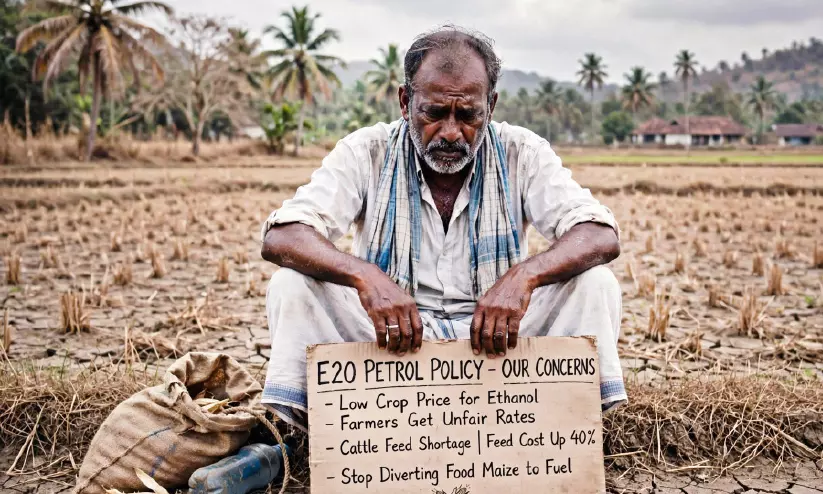

Kalpetta: Dairy farmers in Kerala’s Wayanad are struggling under a sharp rise in production costs, with soaring cattle-feed prices emerging as a major burden. Traders attribute much of the increase to growing demand for maize, soybean and other feed ingredients for industrial uses, including ethanol production under the Centre’s E20 fuel policy.
The price of a 50-kg bag of cattle feed has jumped by Rs 300 in just two months, from Rs 1,350 to Rs 1,650. Depending on the brand, feed prices have increased by Rs 4-10 per kg. Farmers are also facing higher expenses for medicines, labour and electricity, further squeezing their already thin margins.
The E20 policy, which targets petrol blended with 20% ethanol, has increased demand for maize and other grains used in ethanol production. The price of maize, a key feed ingredient, has reportedly surged from around Rs 14,000 to Rs 26,500 per tonne in recent years, adding to feed costs.
A cow producing around 10 litres of milk a day requires nearly six kg of feed daily, apart from grass, hay and mineral supplements. With milk prices failing to rise in proportion, small-scale farmers are increasingly being forced to consider selling their cattle, as maintaining them has become financially unsustainable.
Farmers are demanding urgent government intervention to regulate feed prices and provide direct subsidies. They also want higher subsidies through dairy cooperatives, along with a proportionate increase in milk prices based on production costs.
Dairy farmers warn that without immediate support, rising input costs could push more small producers out of the sector.