















Court warns UP against becoming a ‘police state’ amid rising leg-shooting encounters
text_fields

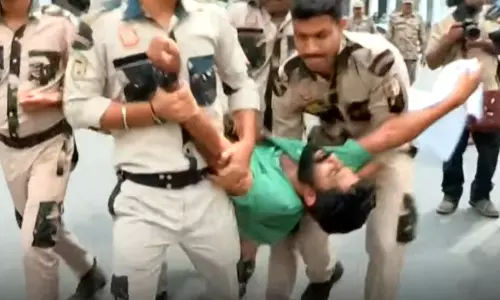
The increased incidents of police firing at the legs of accused persons and portraying such incidents as gunfights or as firing undertaken to prevent escape have drawn the Allahabad High Court’s reprimand, with a reminder that the law permits only the judiciary to punish the accused, describing extra-judicial punishment as an encroachment into the judicial domain.
The court also noted pressure tactics allegedly employed by police officials on judicial officers, particularly chief judicial magistrates, to pass specific orders.
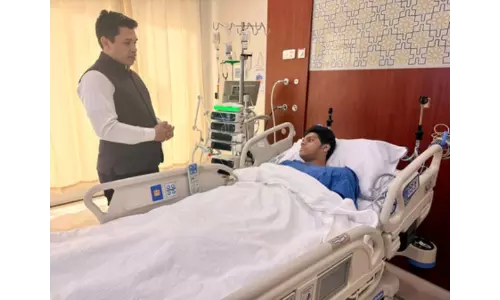
Hearing a set of bail petitions filed by three persons injured in separate alleged encounters, the bench of Justice Arun Kumar Singh Deshwal observed that incidents involving police firing, especially shots aimed at the legs of accused persons, appeared to have become routine, raising serious questions about legality, necessity and proportionality, as the court noted that no police personnel had suffered injuries in any of the incidents under scrutiny, Bar and Bench reported.
Taking cognisance of the pattern emerging from these cases, the court sought explanations from Director General of Police Rajiv Krishna and Additional Chief Secretary (Home) Sanjay Prasad, directing them to appear through video conference and clarify whether any verbal or written instructions had been issued to police personnel to shoot accused persons in the legs or to project such incidents as gunfights.
The bench further indicated that such actions seemed to be undertaken either to please superior officers or to teach accused persons a so-called lesson, while reiterating that India, as a democratic country governed by the rule of law, draws a clear distinction between the roles of the executive, legislature and judiciary, and that any attempt by the police to assume punitive authority cannot be countenanced.
In one of the cases examined earlier, the court had sought details on whether a first information report had been registered and whether the injured person’s statement had been recorded before a magistrate or a medical officer, following which the state informed the court that although an FIR had been lodged, no statement had been recorded, and that the investigation had initially been conducted by a sub-inspector before being transferred to an inspector.
On this basis, the court held that the Supreme Court’s guidelines governing police encounters had not been followed, and it directed the senior officials to clarify whether instructions existed to ensure mandatory compliance with procedures relating to FIR registration, recording of statements and investigation in cases involving death or grievous injury during alleged gunfights.
During the subsequent hearing, the bench also raised alarm over reports of police officers exerting pressure on judicial officers, warning that Uttar Pradesh could not be allowed to slide into a police state, while stressing the need for institutional mutual respect and affirming that no police officer stands superior to a judicial officer within the constitutional framework.
The Director General of Police assured the court that appropriate instructions would be issued to reinforce adherence to established legal protocols and to uphold the supremacy of law.