



















Assam Pu’er tea sells for Rs 12,000 per kg at auction
text_fields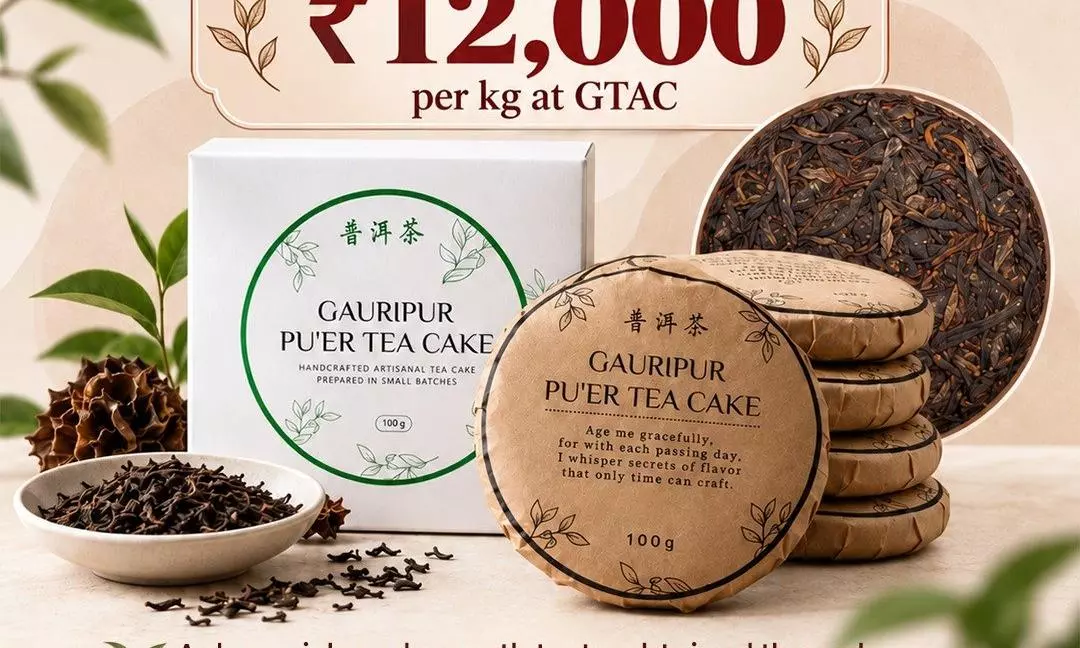

Five kg of Assam-made Pu’er tea was sold for Rs 12,000 per kg at the Guwahati Tea Auction Centre on Friday, marking a premium price for the speciality tea.
The tea was produced by Gauripur Tea Industry in Golaghat and sold through broker J Thomas. Gauripur Tea Industry, owned by Aparaj Saikia, began producing Pu’er tea in 2023.
Assam Chief Minister Himanta Biswa Sarma shared the development on X, describing it as a significant moment for the state’s evolving tea industry.
Pu’er, also known as Pu-erh, is a fermented tea traditionally produced in China’s Yunnan province. It is generally made from large tea leaves and pressed into cakes or bricks. The Assam version uses Camellia sinensis var. assamica, a tea variety commonly found in the state.
Gauripur Tea Industry uses only the tea bud rather than the conventional one bud and two leaves. The tea is made entirely by hand and takes between three and 10 days to prepare.
Saikia told The Sentinel that the company began producing the tea commercially in carefully crafted small batches to explore and promote speciality teas from Assam beyond conventional black and green tea.
North Eastern Tea Association adviser Bidyananda Barkakoty said Phalap tea could be another speciality tea to be sold through the Guwahati auction. Traditionally made by the Singpho community in parts of Tinsukia and Margherita, Phalap uses large Assamica leaves, which are packed in bamboo and aged. Barkakoty said it develops an earthy, woody and smoky character similar to Pu’er tea.
The Assam government has increased its subsidy for orthodox and other speciality teas from Rs 10 to Rs 15 per kg from the 2026-27 financial year. Barkakoty said the move could encourage production of non-CTC teas and help address the demand-supply imbalance caused by overproduction of CTC tea.