

















APCR seeks clarification from Bengal govt on police survey of mosques, religious institutions
text_fields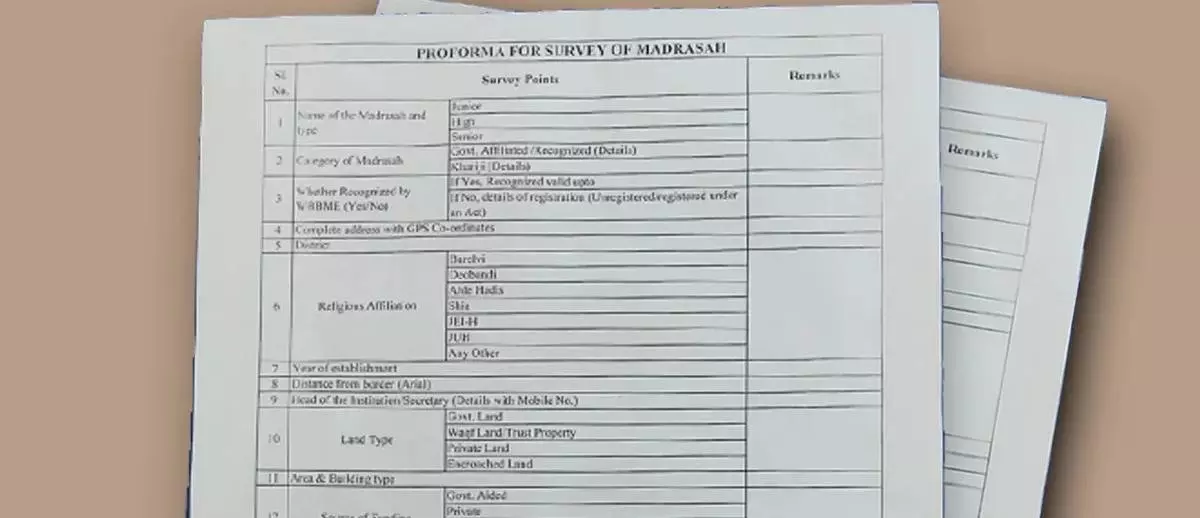
Photo: Maktoob Media

Kolkata: The West Bengal unit of the Association for Protection of Civil Rights (APCR) has sought an explanation from the state government and police over survey forms reportedly being circulated among the management committees of mosques, madrasas, Idgahs and mazars.
The organisation said the forms seek a wide range of information about the institutions, including their religious affiliation, ownership of property, funding sources, details of foreign visitors and students, and records of cases, FIRs and charge-sheets. Some questions, it said, also relate to political and organisational matters, Maktoob Media reported.
APCR has questioned the authority under which the forms are being circulated. It said the copies in its possession do not identify any government notification, official memorandum, issuing authority, date or specific law permitting the collection of the information.
The organisation said the authorities should make the relevant order public if the exercise has been authorised by the government or police. It argued that collecting sensitive information concerning religious institutions requires a clear legal mandate and a publicly identifiable administrative framework.
Particular concern was raised over questions seeking details about the sectarian or religious affiliation of mosques and other institutions. APCR asked the authorities to explain the purpose of collecting such information and its relevance to the survey.
The civil rights group also said the police forms should not be confused with the separate survey of madrasas being conducted by the state’s Department of Minority Affairs and Madrasah Education. According to APCR, the existence of an authorised madrasa survey does not establish the legal basis for an independent police exercise involving additional information.
APCR has asked the government and police to disclose who authorised the forms, why the information is being collected, which law or order governs the exercise, and how the data will be accessed, stored and used.
The organisation said it had no objection to legitimate administrative verification or maintaining official records of religious institutions. At the same time, it stressed that any such exercise must be conducted in a transparent, lawful and non-discriminatory manner and should not become a means of profiling or selectively scrutinising a particular community.
APCR maintained that the authorities should publicly release the government order if the exercise is an official survey. If it is being conducted by the police independently, the legal provision and purpose behind the exercise should be clearly stated.