















15 official documents fail to save Assam Muslim man from being declared a foreigner
text_fields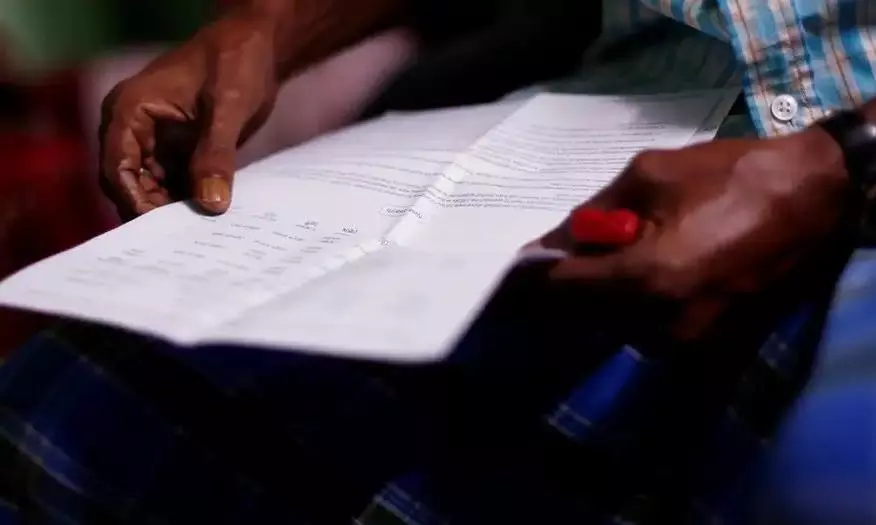

Amid reported arbitrariness and due process violations by Assam's Foreigners Tribunals, the Gauhati High Court has upheld a tribunal order declaring a Muslim man a foreigner despite his submitting 15 documents, including NRC records, electoral rolls, a school certificate and a PAN card, after the tribunal relied on an inquiry report that the petitioner alleged was unfair.
A Division Bench of Justices Kalyan Rai Surana and Shamima Jahan ruled on Tuesday that the petitioner, Aminul Hoque, had failed to discharge the burden imposed under Section 9 of the Foreigners Act, 1946, which requires a person proceeded against to prove that they are not a foreigner.
The court observed that although Hoque had produced 15 documentary exhibits, they did not satisfactorily establish his claim to Indian citizenship. It further held that oral testimony alone could not bridge deficiencies in the documentary evidence or establish that he was the same individual whose name appeared in electoral rolls from the 1990s onwards.
Hoque, a daily-wage labourer residing in rented accommodation, had challenged a Foreigners' Tribunal order dated February 28, 2019. He contended that he was an Indian citizen by birth and that the investigating officer's inquiry report, on which the proceedings were founded, was unfair.
To support his claim, Hoque relied on documentary evidence spanning more than six decades, including electoral rolls from 1966 to 2017, the 1951 NRC, a 1973 land deed, his school certificate, PAN card and EPIC.
He argued that minor variations in the spelling of his father, mother and grandfather's names across different records were clerical inconsistencies and should not invalidate his claim to citizenship. Both he and his father also testified before the tribunal, maintaining that the family had continuously resided in Assam.
Before the High Court, counsel for Hoque submitted that spelling discrepancies in public records are common and, relying on Supreme Court precedents, argued that such variations cannot by themselves justify the denial of citizenship. The petitioner also contended that computer-generated NRC records constituted admissible and reliable evidence.
The Foreigners' Tribunal, however, identified several inconsistencies. It noted unexplained differences in the ages recorded in successive electoral rolls and found that some individuals listed in the 1979 electoral roll had not been proved to belong to the petitioner's family. It concluded that Hoque had failed to establish a credible linkage with ancestors whose presence in India before January 1, 1966, had been proved.
Affirming those findings, the High Court held that the petitioner had failed to demonstrate any perversity, illegality or misapplication of law by the tribunal. It accordingly dismissed the petition, holding that the legal consequences flowing from the tribunal's declaration would follow in accordance with law.
The judgment comes against the backdrop of a July 2025 study by the National Law School of India University and Queen Mary University of London titled Unmaking Citizens: The Architecture of Rights Violations and Exclusion in India's Citizenship Trials.
Analysing more than 1,200 Gauhati High Court orders alongside Supreme Court judgments and interviews with lawyers and litigants, the report alleged widespread arbitrariness and due process violations in the functioning of Assam's Foreigners Tribunals.