










‘ISRO’: the jasmine whose fragrance is not felt at home
text_fields

The US space agency NASA has announced a piece of news that would make any Indian proud. NASA has invited the Indian Space Research Organisation (ISRO) to participate in the ‘Moon Base’ project, which aims to allow humans to stay on the Moon for long periods and conduct research activities. One of the main goals of NASA’s Artemis mission to return humans to the Moon after five decades is to establish a permanent base on Earth’s satellite. The US has invited ISRO to participate in the project at a time when the scientific world is eagerly looking forward to this mission, which is crucial for human space exploration, including future missions to Mars. This opportunity, which few other countries have succeeded in getting, is undoubtedly a testament to ISRO’s outstanding performance. And theopportunity for India in humanity’s new journey to the Moon and, from there into the vastness of the universe will further accelerate the country’s ongoing space exploration push.

No human has landed on the Moon since 1972. Dozens of lunar explorers, from Neil Armstrong to Eugene Cernan, have made brief visits. But that is not what new missions are aiming for. Various countries are setting out for the Moon with the aim of laying the foundation for a long-term human presence on Earth’s only satellite. Thus, a new ‘space race’ is taking place in the scientific world. The US, Russia, China and Japan are all at the forefront of the race. The US is one step ahead in the race; NASA’s Artemis mission is moving forward with great expectations. In 2022, an unmanned spacecraft called Artemis I reached lunar orbit and revolved as far as 9,000 close to the the lunar surface. The Artemis II mission, which launched this past April, also had four passengers. Although they did not land on the Moon, they also reached the close to the satellite and returned safely to Earth. Next year, Artemis III will take off in a similar manner to be followed by Artemis IV that will land on the Moon carrying humans. Considering NASA’s technological advances, all this is likely to become a reality before 2029. The establishment of the Moon Base is a continuation of that. India is already a member of NASA’s Artemis Accords. As such, Indian researchers are also involved in this mission. In addition, the Artemis project has also received some technical assistance from ISRO. However, now that the Artemis mission is about to enter its ultimate goal of building a Moon Base, seeking ISRO’s help is more important than ever.
First of all, the fact that most of ISRO’s missions in the current century have been successful is an achievement that any country would envy. Missions like Chandrayaan, Mangalyaan, Astrosat and Aditya have all been successful. Gaganyaan is also on the same path. ISRO, which is planning to make human space travel a reality within two years, has also announced that it will take Indians to the Moon by 2040. NASA needs the technological knowledge that India has acquired in this field. It is clear that NASA and the US are aiming to make it possible by inviting ISRO to the ‘Moon Base’ research partnership. On the other hand, India is also getting an opportunity to be a part of one of the biggest scientific experiments of our time. A station is being planned where astronauts can stay on the Moon for a month or two and conduct research. This base camp will have three components: a foundational surface habitat for astronauts to live and work, a lunar terrain vehicle for astronauts to travel across the lunar surface, and a habitable mobility platform for longer distances. In other words, this Moon Base will be the first colony to be established by humans on the Moon. As such, ISRO has the opportunity to be part of a mission that also has political dimensions.
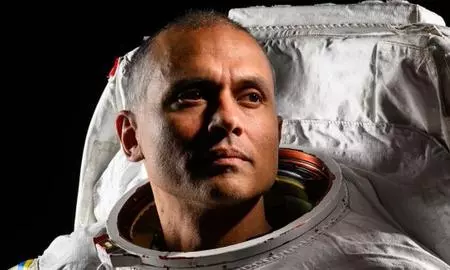
Even though ISRO’s achievements are being recognised internationally, it is doubtful whether our authorities have adequately recognised this research institute. In recent times, all that we have been hearing from there are troubling stories of an exodus. In the space of a few months, more than a hundred scientists and officials have left their jobs there. Due to this, many projects have become uncertain. This is the result of the government’s flawed science policy. Cutting the annual financial allocation to scientific institutions, including ISRO, and, on the other hand, giving unrestricted opportunities to private institutions in these strategic research areas has actually backfired. Many projects started by ISRO are now at a standstill. Many missions do not have government approval. Along with this, the central government, which is controlled by the Sangh Parivar, prefers ‘Indian’ and ‘ancient’ sciences over such basic scientific research. This is where a lot of funds are currently flowing. The science-oriented thoughts of the first Prime Minister Jawaharlal Nehru and corresponding policies made India’s dream of having its own space programme a reality. At the same time, our nation was creating a new history when a group of talented scientists and engineers who dedicated their lives to the nation came together. The latest news from NASA comes at a time when the Modi government is continuously forgetting its reputation.