













UN launches campaign for Afghan women's education with Somaya Faruqi
text_fields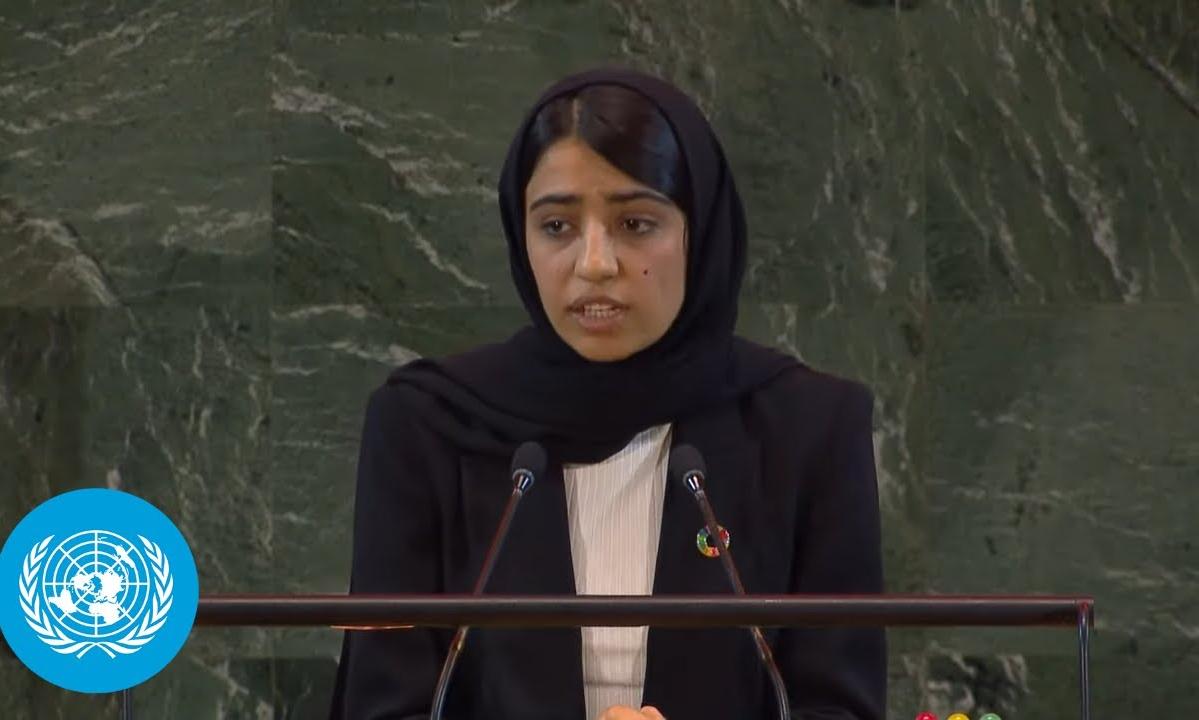

Kabul: Afghan women's fight for education rights reached the UN when they demanded the right to learn.
The campaign, titled #AfghanGirlsVoices, was launched by the UN's Education Cannot Wait global fund on the second anniversary of the fall of the internationally recognised government in Kabul. The campaign is being spearheaded by engineering student Somaya Faruqi, who fled Afghanistan to continue her studies in the United States after the Taliban regained power and imposed restrictions on education for girls and women, reported AFP.
The lives of 1.1 million girls and women have changed for the worse since the ban on education was imposed.
Somaya Faruqi stressed the importance of education for Afghan girls and women, emphasising that it is the key to freedom. She highlighted the severe restrictions imposed on them, which deny them access to public spaces like schools, gyms, and parks, forcing them to stay at home.
Many had to leave the country to continue their education. Faruqi
and her nine classmates left the country in 2021. Now, she is studying engineering at Sacramento State University in California with a scholarship from Qatar.
Speaking to AFP, she said: "This campaign is meant to bring the attention of the world again to the girls in Afghanistan, and (their) education issues. Afghanistan seems to be forgotten."
The Taliban government's policies have resulted in the exclusion of women from various aspects of public life, including education and employment, causing a significant challenge to international support and recognition of the regime. US Secretary of State Antony Blinken highlighted the necessity of supporting women's and girls' rights for a normalised relationship with the Taliban.
A recent UN report stated that the conditions for women and girls in Afghanistan are among the worst globally, with the Taliban's interpretation of Islam leading to a form of "gender apartheid." The UN special envoy for global education, former British Prime Minister Gordon Brown, even stated that the state of women's rights in Afghanistan should be considered a crime against humanity and prosecuted by the International Criminal Court.
The Taliban's measures include banning girls from secondary school, shutting down universities for women, and severely restricting their participation in the workforce. For many Afghan families, this leaves marriage as the only option for their daughters, often against their will. Many girls have been compelled to marry, leading to a rise in depression and suicide rates among them, said Somaya in a statement.
The Education Cannot Wait campaign aims to amplify the voices of Afghan girls and women through social media, coinciding with the UN General Assembly scheduled for September 18 and 19. As these voices echo across the global stage, the plea for education rights gains momentum in the midst of the ongoing crisis in Afghanistan.