











Thailand-Cambodia border conflict claims 32 lives, UN and ASEAN call for calm
text_fields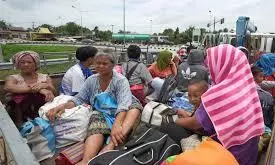

Fighting along the Thailand-Cambodia border entered its third consecutive day on Saturday.
It has now escalated into a deadly confrontation that has so far claimed at least 32 lives and displaced tens of thousands.
The situation prompted the United Nations Security Council to hold an emergency closed-door meeting in New York on Friday, where all 15 member states urged both nations to show restraint and resolve the conflict peacefully.
While the council did not release a formal statement, a diplomat present at the meeting stated that there was consensus on urging a de-escalation of hostilities and calling on the Association of Southeast Asian Nations (ASEAN) to help mediate the conflict.
Cambodia’s UN Ambassador Chhea Keo, whose country initiated the meeting, appealed for an "immediate ceasefire, unconditionally," and emphasised the importance of a peaceful resolution.
Defending Cambodia’s actions, Keo said, “We do not do that,” in response to accusations that his country had attacked Thailand. “How could a small country with no air force attack a country with an army three times its size?”
Meanwhile, Thailand’s UN Ambassador left the meeting without making a statement.
The humanitarian toll of the fighting has been severe. Thailand’s Health Ministry reported that over 58,000 people have fled to temporary shelters in four provinces, while Cambodia stated that more than 23,000 have been displaced on its side of the border.
Thailand reported 19 deaths, including 13 civilians, and 59 injuries.
Cambodia’s death toll rose to 13 on Saturday, with seven civilians and five soldiers among the most recent casualties.
The violence erupted following a land mine explosion on Wednesday that injured five Thai soldiers. Thailand accused Cambodia of initiating the conflict by attacking areas near the disputed Ta Muen Thom temple, a flashpoint claimed by both sides. Thai officials said Cambodian forces used heavy artillery and Russian-made BM-21 rocket launchers, prompting retaliatory fire.
Thailand’s acting Prime Minister, Phumtham Wechayachai, condemned the civilian casualties and damage to a hospital, suggesting potential war crimes. “Thailand had exercised the utmost restraint and patience in the face of provocations and aggression from Cambodia,” he said.
On the Cambodian side, officials claimed Thai rockets hit civilian sites, including a school compound and a pagoda, while denying civilian casualties from those incidents. Cambodia's Education Ministry announced the closure of all schools in Oddar Meanchey province.
As shelling intensified, civilians fled in panic.
In Thailand’s Surin province, about 600 evacuees found shelter in a university gymnasium.
Hospitals near the conflict zone have also been impacted. In Phanom Dong Rak, shelling damaged a hospital and left several soldiers injured, while in Sisaket province, more residents evacuated following government orders.
Across the border, Cambodian villagers took similar precautions, digging bunkers and fleeing to Buddhist temples in remote areas.
Malaysian Prime Minister Anwar Ibrahim, chairing ASEAN, reported that both countries had agreed to a ceasefire and troop withdrawal, though implementation is pending. “I urged them to open space for peaceful dialogue and diplomatic resolution,” he said, offering Malaysia’s help in facilitating talks.
UN Secretary-General António Guterres also called for restraint and encouraged resolution through dialogue.
The current clash marks a rare instance of armed conflict between ASEAN nations. Although the 800-kilometer Thailand-Cambodia border has long been disputed, previous confrontations - like the one in 2011 that left 20 dead - were shorter in duration.
The current crisis began in May when a Cambodian soldier was killed in a border skirmish, leading to increased tensions. After last week’s land mine explosion, Thailand closed the border and expelled the Cambodian ambassador, setting the stage for the latest outbreak of violence.