

















Mysterious disease in Congo claims over 50 lives, WHO on high alert
text_fields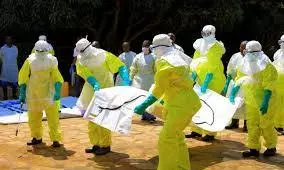

A mystery illness has surfaced in the Democratic Republic of the Congo (DRC), raising serious concerns among health authorities.
The disease, first reported after three children consumed a bat, has led to the deaths of more than 50 people within just five weeks.
According to the World Health Organization (WHO), the outbreak has affected 431 individuals, resulting in 53 fatalities across remote villages in Equateur province as of February 16.
Patients infected with the mystery disease experience fever, vomiting, and internal bleeding, with most succumbing within 48 hours of developing symptoms. This rapid progression has alarmed health professionals, including Serge Ngalebato, medical director of Bikoro Hospital, who described the short symptom-to-death interval as deeply concerning.
"The outbreaks, which have escalated within days, present a major public health threat. The exact cause remains unknown," a WHO spokesperson stated.
The WHO is currently investigating the outbreak, but the remote location and limited healthcare facilities are making it difficult to contain the spread.
Health researchers have identified "hemorrhagic fever" symptoms, which are commonly linked to highly lethal viruses such as Ebola, Marburg, dengue, and yellow fever. However, after testing more than a dozen samples, scientists have ruled out these known viruses, leaving the origin of the illness still unidentified.
"We are examining whether the disease is caused by another infection or possibly a toxic agent. The WHO is evaluating the situation to determine the necessary level of support," a spokesperson added.
The emergence of this mysterious disease follows a previous outbreak of Disease X in the DRC last year, which resulted in 143 deaths.
Health experts warn that zoonotic diseases - illnesses transmitted from animals to humans - are on the rise.
The WHO reports that such outbreaks have increased by 60% over the past decade, largely due to deforestation, biodiversity loss, and environmental degradation, which bring humans into closer contact with wildlife and their pathogens.
The DRC’s fragile healthcare system poses a significant risk for further spread of the disease, making swift intervention essential. The consumption of bushmeat, including wild animals like bats, is a common practice in certain regions, increasing the likelihood of transmitting deadly viruses such as Ebola, HIV, and SARS.