













AIIMS launches AI-powered app to support student mental health and prevent suicides
text_fields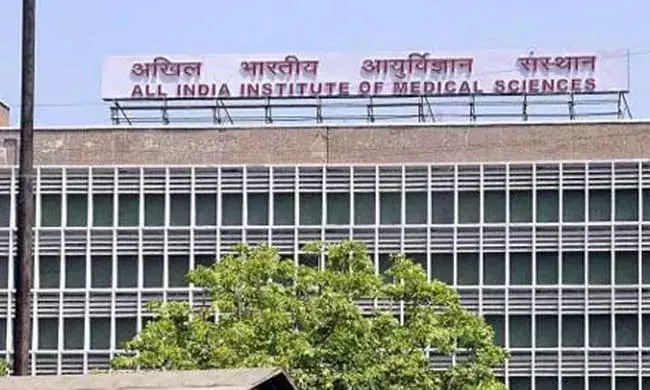

New Delhi: AIIMS-Delhi on Wednesday rolled out an Artificial Intelligence-based mental health and wellness program aimed at addressing suicidal tendencies among students and reducing stigma around mental health.
The initiative, launched on World Suicide Prevention Day, includes the “Never Alone” app, designed to provide screening, intervention, and follow-up care for college and university students. The program was simultaneously introduced at AIIMS-Bhubaneswar and the Institute of Human Behavior and Allied Sciences (IHBAS) in Shahdara.
“‘Never Alone’ is a secure, web-based app accessible 24/7 via WhatsApp. It allows students to connect virtually and in person with mental health experts,” said Dr Nand Kumar, professor of psychiatry at AIIMS-Delhi.
He explained that the app offers highly personalized mental health screening at an affordable cost of 70 paisa per student per day. Educational institutions wishing to access the service will need to subscribe through AIIMS-Delhi.
The service will be extended to all AIIMS institutes free of cost through the Global Centre of Integrative Health (GCIH), a not-for-profit initiative supported by AIIMS alumnus Dr Deepak Chopra, a world-renowned expert in integrative health.
Highlighting the urgent need for such interventions, Dr Kumar noted that suicide is a growing public health crisis. WHO data shows one life is lost to suicide every 45 seconds, with 73 per cent of these deaths occurring in low and middle-income countries. NCRB figures revealed 1,70,924 suicides in 2022, the highest in 56 years.
In India, young adults between 18 and 30 years accounted for 35 per cent of suicides in 2022, followed by those aged 30 to 45 at 32 per cent. “Public health approach to suicide prevention argues for a major change in the way we think about suicide and its prevention, including an increase in trained mental health professionals,” Dr Kumar said.
He added that while the link between suicide and mental disorders like depression and alcohol abuse is well established, many suicides also occur impulsively in moments of crisis linked to financial distress, relationship issues, or chronic illness.
“It’s well established that 70 to 80 per cent of people suffering from mental health issues don’t seek treatment. One of the important reasons for the treatment gap is unawareness and stigma. This is reflected in frequent incidents of suicide in medical colleges where psychiatrists and psychologists are available,” Dr Kumar said.