















In a major breakthrough, scientists develop e-skin, claim it could give same sense of touch as real one
text_fields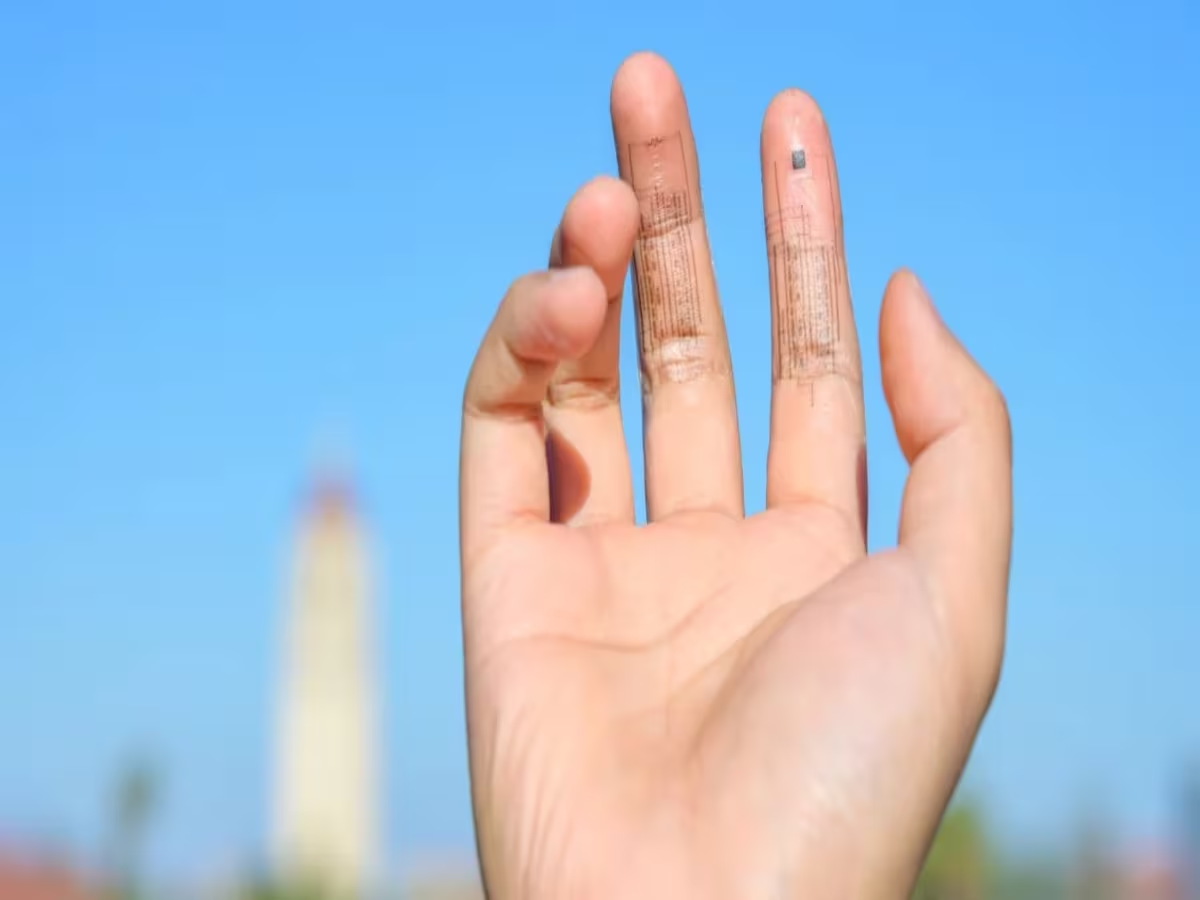

In a stunning breakthrough, scientists at Stanford University in California have developed an electronic skin or e-skin.
The e-skin, invented by Zhenan Bao and team, is made of thin and stretchy rubbery material with electronic circuits and sensors that measure pressure and temperature. Being soft and flexible, it can be wrapped around a human finger.
E-skin is capable of mimicking the same process that causes a finger, toe or limb to move when poked.
A healthy living skin comprises mechanical receptors tasked with sensing information and converting it into electrical pulses. These pulses are transmitted through the nervous system to the brain.
The electronic skin will need sensors and integrated circuits made from rigid semiconductors, the Nature report added.

Bao's team designed a flexible polymer to be used as a dielectric, a thin layer in a semiconductor device which determines the strength of the signal and voltage. This dielectric was used to develop stretchy and flexible arrays of transistors. This sensor can transform physical changes into an electrical pulse and send to the brain.
This e-sensor technology was tested in a rat. Its skin was connected through a wire to its somatosensory cortex in the brain, which processes physical sensations. When the electronic skin attached to the rat was triggered by a touch, it sent an electronic signal to its brain causing the rodent to twitch its limbs.
According to scientists, e-skin can be used in people who suffered major injuries or suffer from sensory disorders. The researchers are hoping that this technology could result in the development of a covering for the prosthetic limb to give the wearers a sense of touch.
Bao's team has been trying to develop a soft and flexible prosthetic skin which can also transmit electrical signals to the brain to allow the wearer to feel pressure, strain or changes in temperature, the journal Nature reported.
According to Bao, the team has a vision for people who lost their limbs need not have an implant in their brain. An implant could be placed into the peripheral nervous system, the report added.
Currently, the e-skin needs to be connected with a wire to an external power source. Bao wants to develop a wireless device. It will require a lot of development for a skin to cover all fingers of the hand and responds to touch, pressure and temperature.
