


















Pakistan's new (un)democratic experiment
text_fields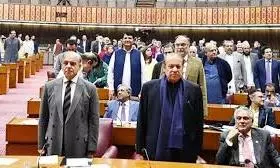

Recent developments in Pakistan concerning the Constitution, military leadership, and the judiciary have extinguished even the faintest hope for democracy in the country. The 27th Constitutional Amendment Bill, introduced in Parliament by Law and Justice Minister Azam Nazeer Tarar on the 8th of this month, was passed just days later, on the 13th, with an overwhelming majority. The Senate approved it with unopposed 64 votes in favour while the National Assembly passed it with a margin of 234–4. Imran Khan’s Pakistan Tehreek-e-Insaf party boycotted the vote.
Two major provisions of the amendment are widely viewed as anti-democratic. One expands the powers and autonomy of the military, while the other curtails the authority of the Supreme Court by creating a separate special court to handle constitutional amendment cases.
Also read: PTI alleges police manhandled Imran Khan’s sisters outside Adiala jail
The military remains the biggest obstacle to democracy in Pakistan, a country that has experienced only limited democratic governance since its formation. Since gaining independence in 1947, Pakistan has been ruled directly by military leaders for 33 of its 78 years. Field Marshal Ayub Khan seized power in 1958, and the same was done later by General Zia-ul-Haq, and still later General Pervez Musharraf. All three overthrew elected civilian governments. Yahya Khan, meanwhile, assumed control after Ayub Khan stepped down bowing to popular uprising. Beyond these periods of overt military rule, Pakistan’s political history is also shaped by military’s “backseat driving,” with generals exerting control over elected governments from behind the scenes. Imran Khan, the leader of the Pakistan Tehreek-e-Insaf party – once popular with both the public and the military – attempted to assert independence from military influence. He was ousted in 2022 after falling out of favour with the army. He has been in prison for nearly two years and faces multiple charges, including corruption.
Also read: Pakistan detains over 1 lakh Afghan migrants in 2025: UNHCR
The figure who rose to power in the country’s political horizon from the Pakistan Army is General Asim Munir, appointed in 2022. Munir quickly consolidated his position within the establishment. One striking example was the White House banquet hosted for him by U.S. President Donald Trump immediately after Operation Sindoor – a gesture that signaled his growing influence. The latest constitutional amendments further underscore Munir’s expanding power. Following the recent conflict with India, Munir was elevated to the rank of Field Marshal, becoming the first five-star general since Ayub Khan. The amendment to Article 243 also introduces a new position: Chief of Defence Forces (CDF). The Army Chief will now simultaneously hold this post, placing him above the Army, Navy, and Air Force. The amendment additionally creates a National Strategic Command, headed by a newly established Commander currently Gen Munir himself. This role will oversee Pakistan’s nuclear assets, with appointments made directly by the Prime Minister based on the advice of the Chief of Defence Staff. A key provision in the amendment is the lifetime immunity granted to five-star Field Marshals and to the President. A Field Marshal, entitled to wear the uniform for life, can now only be removed through impeachment.
Also read: Afghan FM Muttaqi slams Pakistan over airspace violations, refugee expulsions
Another part of the amendment significantly restricts the powers of the Supreme Court of Pakistan. The Supreme Court will no longer have the authority to interpret the Constitution; that power will now rest with a newly created Federal Constitutional Court, whose judges will be appointed by the government. This restructuring has already sparked strong opposition within the judiciary. Lahore High Court Judge Shams Mehmood Mirza and Supreme Court Justices Mansoor Ali Shah and Athar Minallah have resigned in protest. The amendment also grants the President the power to transfer judges – another provision that has drawn criticism and resistance.
Also read: 12 killed, several injured in suicide blast outside Islamabad court
Pakistan’s leadership does not seem to recognise a crucial lesson: when opportunities for democracy are repeatedly squandered, the foundations of the nation begin to be shaken. The dominance of military leaders inevitably shapes the country’s diplomatic and foreign policy decisions. Turkey offers an instructive contrast. For decades, its military functioned as a shadow power. But through a series of phased political interventions by President Erdoğan, the military has been pushed far away from political influence and now largely follows the executive’s directives (though where Erdoğan himself stands in the democratic process is a separate debate). No comparable shift – whether through popular pressure or institutional reforms – is visible in Pakistan. The lesson that no military regime has ever survived popular uprising in history does apply to Pakistan too. Given this principle, It remains to be seen whether these new laws will endure, and for how long.
Also read: India responds to Trump’s nuclear test claim, flags Pakistan’s proliferation record