













From Japanese internment to 9/11 - when emergencies erode our rights
text_fields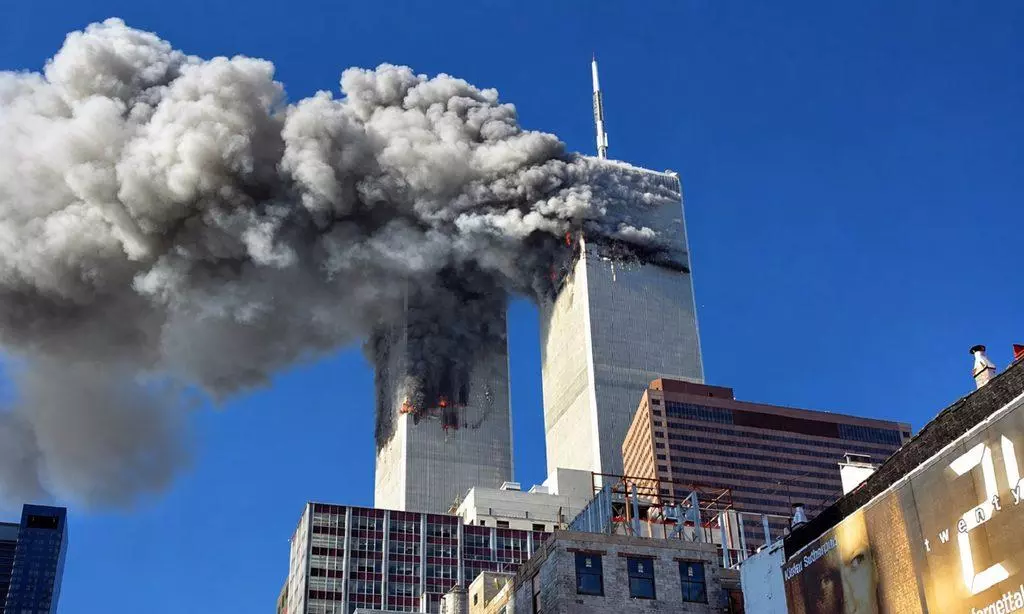
In 1944, as the United States Supreme Court upheld Fred Korematsu's conviction for violating the military order excluding Japanese Americans from the West Coast, Justice Robert Jackson issued a warning that has outlived the case. Once a court validates an emergency measure, he warned, the principle can remain behind "like a loaded weapon”, ready for another government to use when it claims an urgent need.
Jackson was dissenting from one of the most notorious decisions in American constitutional history. Following the attack on Pearl Harbor, more than 120,000 people of Japanese descent were forcibly removed and incarcerated in the United States, roughly two-thirds of them American citizens. A federal commission would later conclude that the policy resulted not from military necessity but from "race prejudice, war hysteria, and a failure of political leadership."
Twenty-five years after Sept. 11, I find myself returning to Jackson's warning. Not because the incarceration of Japanese Americans and the treatment of Muslims after 9/11 were the same. They plainly were not. But both raise a recurring question for democratic societies: What happens to our commitment to rights when we become afraid?
For Muslims who spent the years after 9/11 challenging profiling, rendition, watch lists, Guantanamo Bay, secret evidence and other national-security measures, the Japanese-American experience was both a warning and an inheritance. Muslims did not invent the struggle against fear-driven government power. We inherited it.

I was practicing law in Toronto when nearly 3,000 innocent people were murdered on Sept. 11. Governments had every right and an obligation to protect their citizens. But in the years that followed, Muslims increasingly came to be viewed not simply as neighbors and citizens, but through the lens of national security.
As a lawyer involved in Muslim civil-liberties issues, I spent much of the next two decades dealing with the consequences, including work connected to the Maher Arar Inquiry, security-certificate litigation and Canada's proposed no-fly list. But the legal principles we invoked had been fought for by others long before us.
Japanese Americans Gordon Hirabayashi, Fred Korematsu and Mitsuye Endo challenged wartime curfews, exclusion and incarceration. The courts did not always protect them. The Supreme Court upheld the convictions of Hirabayashi and Korematsu. But on the same day it decided on Korematsu, the court unanimously ruled in ex parte Endo that the government could not continue detaining a concededly loyal citizen.
Canada has little reason to look smugly across the border. More than 20,000 Japanese Canadians were uprooted during the war, their property seized and sold, and restrictions continued even after the war ended. Here is a detail every Canadian law student should know: the first case heard in the Supreme Court of Canada's new building concerned the government's power to deport people of Japanese ancestry. In Reference Re Persons of Japanese Race (1946), the court upheld significant parts of the government's deportation orders. The case eventually went to the Judicial Committee of the Privy Council, which largely upheld the federal government's authority. It is a sobering reminder that courts do not always save minorities from frightened majorities. Sometimes the law itself becomes part of the injustice.
Black Americans built another part of the inheritance we enjoy today. The NAACP and lawyers including Charles Hamilton Houston and Thurgood Marshall spent decades attacking legalized segregation, culminating in Brown v. Board of Education. But they did not fight alone. One of the amicus briefs supporting the challenge in Brown brought together the American Jewish Committee, the Anti-Defamation League of B'nai B'rith, the Japanese American Citizens League, the ACLU and others.

Think about that coalition. Japanese Americans, less than a decade removed from their own incarceration, stood against the segregation of Black children. Jewish organizations stood up for people who were not Jewish. Some of the greatest advances in civil rights came because people understood that protecting only their own community was not enough.
There is a lesson there for Muslims. When we went to court after 9/11 demanding due process and challenging discrimination, we were invoking principles strengthened by Black Americans, Japanese Americans, Jews and others who fought before us.
That inheritance creates obligations as well as rights. Muslims cannot invoke Korematsu when we are profiled and forget Japanese Americans when our own rights are secure. We cannot celebrate Brown while ignoring anti-Black racism. And we cannot ask Jewish organizations and individuals to oppose Islamophobia while tolerating antisemitism. Civil liberties cannot be tribal. If we defend rights only when our own community needs them, we have misunderstood what rights are for.
The consequences of the post-9/11 emergency also extended far beyond civil liberties at home. Brown University's Costs of War project estimates that the post-9/11 wars caused between 4.5 million and 4.7 million deaths, directly and indirectly, and displaced more than 38 million people.
Those figures should not diminish the horror of Sept. 11 or turn suffering into a competition. The nearly 3,000 innocent people murdered that morning deserved justice. But what governments do in response to an emergency also becomes part of its history. The scale of what followed should make us ask not whether governments should respond to genuine threats, but how fear affects the choices they make.
I have been thinking about that question since long before 9/11. As a child in India during Indira Gandhi's Emergency, my family experienced what happens when governments invoke extraordinary circumstances to expand their power. My father, a former editor of an opposition magazine, was wanted for his writings. We eventually left India and began a new life in Canada.
My first law review publication, in 1994, examined human rights during states of emergency. I later pursued the same questions in doctoral research on national security and emergency powers. Seven years later, those questions were no longer academic.
One lesson has stayed with me: powers acquired during emergencies are much easier to acquire than to surrender. And the easiest rights to surrender are usually somebody else's.
That is why Jackson's warning still matters. The immediate order may disappear, but the legal principle can survive it, waiting for another crisis and another unpopular minority.
The identity of that minority changes. Japanese Americans learned what happens when ancestry becomes a proxy for danger. Black Americans lived under laws constructed around racial subordination. Jews know from a much longer history how quickly minorities can be portrayed as alien or disloyal. After 9/11, Muslims became the focus of a new national-security architecture.
These histories are not equivalent, and we should not pretend they are. Nor should we compete over who suffered more. The point is to recognize what earlier generations left us.
When I teach my law students, I am conscious that many of the protections we take for granted were not simply gifts from governments or judges. People had to demand them, often when doing so was deeply unpopular.
Muslims are beneficiaries of that inheritance. We have a responsibility to pass it on.
Twenty-five years after Sept. 11, that may be one of its most important lessons. The measure of our commitment to liberty is not how fiercely we defend our own rights when we are afraid. It is whether we will defend the rights of someone else when everyone else is afraid of them.
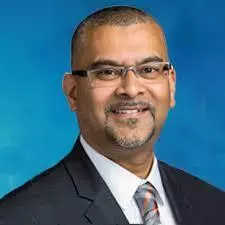
(Faisal Kutty is a Toronto-based lawyer and regular contributor to The Toronto Star. His articles also appear in Newsweek, Aljazeera, Zeteo, and Middle East Eye. He can be followed on X @faisalkutty)
[Courtesy: Japanese national daily Mainchi Shimbun]