













Ethiopian volcanic ash disrupts India–UAE air traffic, several flights rerouted
text_fields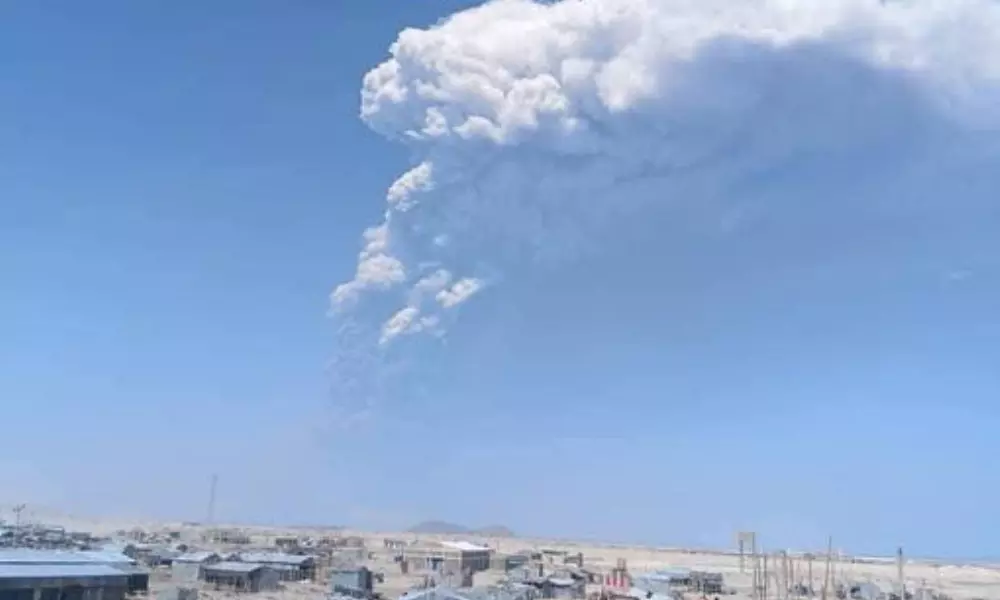

The Indian Directorate General of Civil Aviation (DGCA) has issued a safety advisory to all airlines after volcanic ash from Ethiopia’s Hayli Gubbi eruption drifted across the Middle East, disrupting flight operations and affecting routes through the Muscat Flight Information Region.
Flight cancellations and diversions
Multiple airlines have altered schedules following the spread of volcanic ash.
- Air India cancelled its Delhi–Tokyo flight minutes before take-off and suspended Kochi–Jeddah and Kochi–Dubai services.
- IndiGo grounded its Cochin–Dubai (6E1475) flight and diverted a Kannur–Abu Dhabi service to Ahmedabad.
- Akasa Air cancelled all flights to and from Jeddah, Kuwait, and Abu Dhabi for November 24–25.
- KLM cancelled its Amsterdam–Delhi (KL 871) and return Delhi–Amsterdam (KL 872) flights.
Airport advisories
Mumbai’s Chhatrapati Shivaji Maharaj International Airport issued a passenger advisory warning of possible international route disruptions. The airport urged travellers to confirm flight statuses before departure and stay updated through airline notifications.
DGCA instructions to operators
The DGCA directed airlines to avoid ash-affected regions and review operational manuals on volcanic ash procedures. Airlines must brief flight and cabin crews, monitor NOTAMs and weather updates and report any suspected ash encounters, including engine issues or cabin odours. Aircraft flying over impacted areas are to undergo post-flight inspections.
Airports have been told to inspect and clean runways and suspend operations if volcanic residue is detected. Operators must maintain round-the-clock monitoring of satellite imagery and bulletins from the Toulouse Volcanic Ash Advisory Centre (VAAC).
Regional impact of the eruption
The Hayli Gubbi volcano in Ethiopia’s Afar region erupted for the first time in nearly 10,000 years, blanketing nearby villages such as Afdera in ash and causing moderate tremors around Erta Ale. The volcano lies about 15 km southeast of Erta Ale, one of Africa’s most active volcanoes.
The ash cloud crossed the Red Sea toward Oman and Yemen before spreading over parts of the Arabian Peninsula. Satellite imagery now shows the plume extending from Ethiopia to Gujarat, with residual ash expected to cause hazy skies and possible flight delays across northern India.
Authorities continue to track the ash movement as meteorological agencies warn of reduced visibility and temporary air traffic disruptions in affected regions.