















Saudi-UAE tension: CNN links rift to false claim of Saudi push for US sanctions on Abu Dhabi
text_fields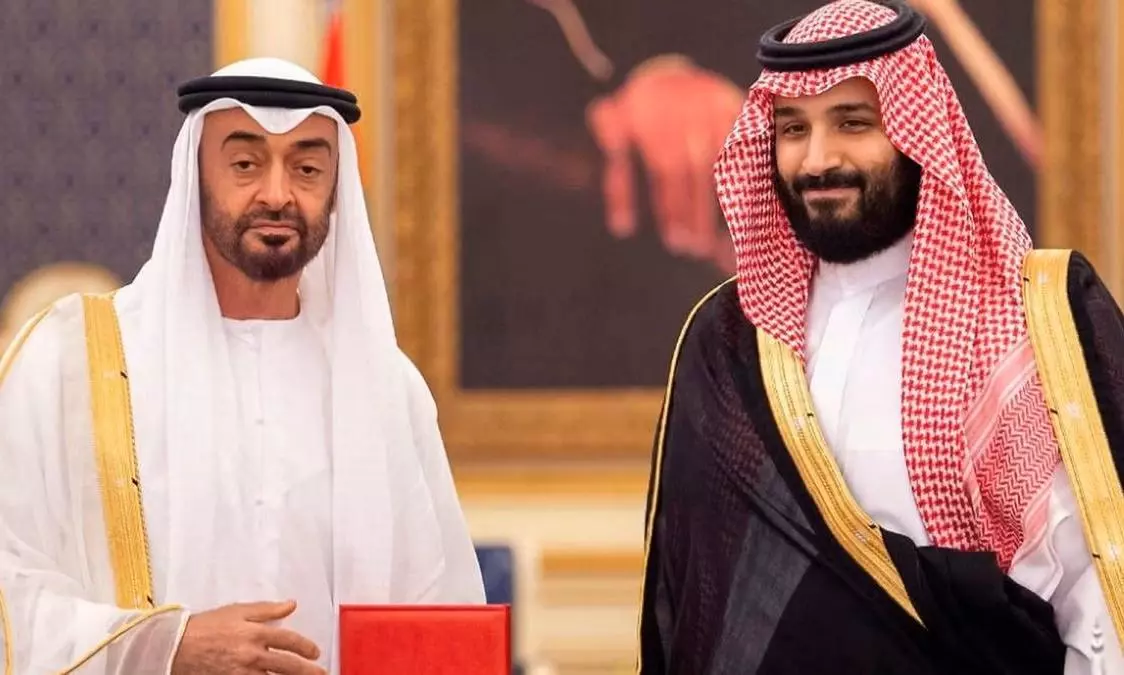

False information suggesting that Saudi Arabia had urged US President Donald Trump to impose sanctions on Abu Dhabi for its backing of Southern Transitional Council (STC) forces, and that Trump had made a public announcement about his country’s engagement to resolve the conflict in Sudan at the request of Saudi Crown Prince Mohammed bin Salman, could have prompted a rift between Saudi Arabia and the UAE, according to the US-based news channel.
The report says Saudi officials believe Abu Dhabi was misinformed that Crown Prince Mohammed bin Salman, during his November visit to Washington, had asked President Trump to sanction the UAE over its alleged support for a party involved in Sudan’s civil war, a claim that Riyadh maintains is entirely untrue.
Saudi Arabia, according to CNN, is convinced that this false narrative contributed to the UAE mobilising STC forces, which it supports, in Yemeni provinces bordering the Kingdom, thereby escalating tensions between the two Gulf allies.
CNN further reports that Riyadh subsequently reached out to Abu Dhabi to clarify that no such request had been made by Mohammed bin Salman, while a UAE official who spoke anonymously to the channel did not directly address the allegation of false information when questioned.
During the November visit, President Trump publicly announced that he had instructed his administration to intervene diplomatically to help resolve the war in Sudan, acting on a request from the Saudi Crown Prince, although neither Trump nor Mohammed bin Salman, nor contemporaneous Saudi or US media reports, mentioned the UAE in that context.
The strain in relations appeared to become more visible on 30 December, when Saudi Arabia launched airstrikes on what it described as a UAE military equipment shipment bound for Yemen that had not been coordinated with the Saudi-led coalition.
Riyadh also backed the internationally recognised Yemeni government’s demand that UAE forces leave the country, a call Abu Dhabi agreed to honour while issuing a statement asserting that the withdrawal was voluntary and reiterating its commitment to Saudi Arabia’s security and sovereignty.
The STC has since indicated its willingness to engage in dialogue, a position that aligns with Saudi Arabia’s repeated calls for the Southern issue to be discussed at the negotiating table rather than on the battlefield, including through talks proposed to be held in Riyadh.
The situation is further complicated by Aidarous Al-Zubaidi, the president of the STC, whose alleged dual citizenship has drawn criticism from Yemeni commentators, alongside resurfaced statements in which he expressed openness to relations with Israel should southern Yemen gain independence.
Yemen’s Information Minister Moammar Eryani has accused the STC of fostering chaos, facilitating the spread of weapons in eastern provinces and exploiting the threat of Al Qaeda for political gain.
CNN also notes that Saudi concerns extend beyond Yemen, as Riyadh is reportedly wary of UAE policies in Sudan, the Horn of Africa and Syria, particularly Abu Dhabi’s engagement with groups perceived to harbour secessionist ambitions.
These concerns arise against a regional backdrop in which the UAE’s close partnership with Israel since the 2020 Abraham Accords intersects with policies Saudi Arabia deems destabilising, while Riyadh has reaffirmed, including during Mohammed bin Salman’s Washington visit, that normalisation with Tel Aviv is contingent on recognition of a Palestinian state and a credible two-state pathway.