













Saudi Arabia will honour energy commitments despite challenges, Prince Abdulaziz says
text_fields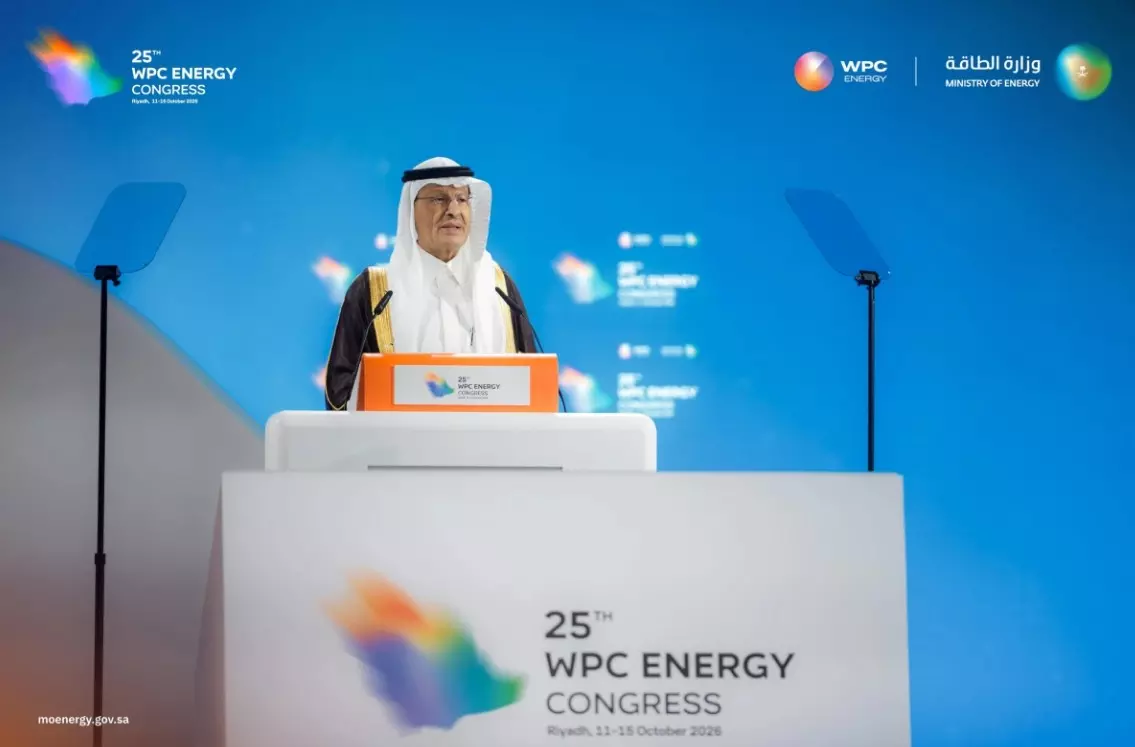

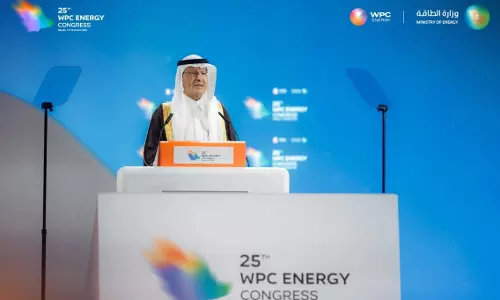
Saudi Arabia will overcome current challenges, honour its international energy commitments and continue its economic transformation, Energy Minister Prince Abdulaziz bin Salman said on Monday.
Opening the 25th WPC Energy Congress in Riyadh, the minister said recent regional developments and attacks on infrastructure had shown that energy security could never be taken for granted.
He said countries must prepare for disruption long before a crisis, pointing to Saudi Arabia’s decades of investment in spare production capacity, storage facilities, alternative export routes, technology, domestic supply chains and skilled personnel.
Those investments were intended to maintain reliable supplies and allow the Kingdom to withstand disruption and recover quickly, he said.
Prince Abdulaziz said resilience should be judged beyond production capacity, pipelines and electricity generation. The ability to keep operating, repair damaged infrastructure, redirect supplies and recover under pressure was equally important.
He described preparedness as a continuing responsibility requiring sustained investment and practical action.
Domestic manufacturing and supply chains were central to that approach, he said. Developing local capabilities served more than an economic purpose: it helped maintain operations and shorten recovery times when international supplies were disrupted.
The minister said energy security and the transformation of the global energy sector must advance together, adding that an energy future for all required energy security for all.
Saudi Arabia would continue investing in reliable oil and gas supplies while expanding renewable energy, electricity grids, energy storage and gas infrastructure.
It would also develop lower-emission technologies, strengthen domestic manufacturing and supply chains, and invest in workforce skills.
Prince Abdulaziz said the Kingdom remained committed to Vision 2030, the development of its energy and industrial capabilities, and its responsibilities to citizens and international partners.
The congress, held under the theme “Pathways to an Energy Future for All”, brings together government officials, energy executives, investors, experts and industry professionals. It is the first time Saudi Arabia has hosted the event in its more than 90-year history and continues until October 15.
WPC Energy president Pedro Miras highlighted Saudi Arabia’s role in global energy systems, citing its investments and contributions to technological innovation.
He said energy security remained essential to economic growth and social stability, while changes across the sector required sustained, long-term investment.
Miras identified artificial intelligence, digitalisation, emerging fuels and carbon storage technologies among the developments shaping the industry. He also called for stronger international cooperation to achieve a secure and sustainable energy future.
The program includes ministerial dialogues, strategic discussions and technical sessions on energy markets, investment, natural gas, carbon management, critical minerals, digital transformation and artificial intelligence.
An accompanying exhibition covering approximately 50,000 square metres presents technologies and solutions from international energy companies and participating countries
The congress forms part of Riyadh Energy Week, which brings several international energy meetings together in the Saudi capital.
These include technical meetings for the 17th Clean Energy Ministerial and the 11th Mission Innovation Ministerial, hosted from October 11 to 13 under the theme “Inspiring Transformations to Deliver Regional Transitions”.
The congress is the flagship event of WPC Energy, an international organisation founded in 1933 whose membership represents more than 60 countries.