
















Seepage detected in Mumbai's undersea tunnel just months after opening
text_fields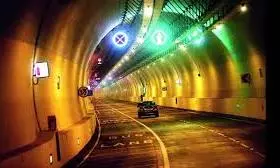

Mumbai’s coastal road tunnel, India’s first undersea tunnel, is showing signs of seepage less than three months after it opened.
The twin tunnels, each with a diameter of 12.19 meters and running 17 to 20 meters below sea level, have raised safety concerns as videos of the leakage surfaced on social media on Sunday morning, particularly with the monsoon season approaching.
The tunnel, which partially opened to traffic on March 11, has already seen over 7 lakh vehicles use the route. The cause of the seepage is currently under investigation.
Maharashtra Chief Minister Eknath Shinde, who inspected the site, acknowledged the issue, saying, "I immediately called the commissioner. There is leakage at two-three places." He assured that experts have been consulted and stated, "There is no threat to the original structure. It will be filled using specific technology, and we will find a permanent solution. Passengers will not face any problems. There will be no water here during the rainy season."
This incident follows an earlier problem on April 10 when water entered the pedestrian underpass of the Haji Ali Coastal Road, leading to widespread criticism of the Brihanmumbai Municipal Corporation (BMC).
The Coastal Road, part of a masterplan for the city developed in 1967, was inaugurated by Chief Minister Shinde along with his deputies, Devendra Fadnavis and Ajit Pawar. Shinde has announced that the second phase of the coastal road will be opened by June 10.
The 2.07 km tunnel begins near Girgaon, ahead of Marine Drive, and extends north under the Arabian Sea, passing Girgaon Chowpatty and Malabar Hill, and ending at Priyadarshini Park in Breach Candy. The coastal road significantly reduces the commute time from Girgaon to Worli from 45 minutes to just 10 minutes.
The tunnels, making up a 2-km stretch of the 10-km road, are designed to resemble the iconic C-shaped Marine Drive promenade.