

















SC will consider petition to revive NJAC and replace collegium system: CJI
text_fields

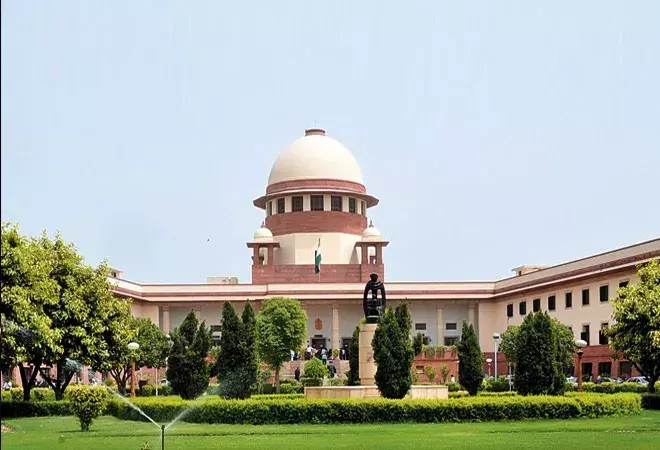
Nearly a decade after rejecting the National Judicial Appointments Commission (NJAC) Act, the Supreme Court on Wednesday (November 26) indicated that it might examine a plea seeking to revive the NJAC as an alternative to the existing collegium system for appointing judges to higher courts.
The remarks were made after advocate Mathews Nedumpara orally urged the court to reconsider the earlier judgment and reopen the issue of judicial appointments. Chief Justice of India Surya Kant responded by saying the court would look into the request, according to a report by New Indian Express. Nedumpara argued that earlier benches had not adequately considered his submissions.
During the exchange, the CJI was reported to have reacted sharply to Nedumpara’s insistence, initially responding in Hindi. When the lawyer said he did not understand the language, the court thereafter stated that it would consider the plea, the Wire reported.
The NJAC had been created through a constitutional amendment to replace the collegium system with a mechanism that would give the executive a formal role in judicial appointments. In 2015, the Supreme Court, by a majority of 4–1, struck down the amendment and declared the NJAC Act unconstitutional, restoring the collegium system.
However, the court had also acknowledged at the time that the existing system of judges appointing judges required reform. Then Chief Justice J.S. Khehar had observed that there was a need to improve the process of judicial appointments and had invited suggestions to make the system better and more transparent, noting that diversity of opinions was essential for meaningful reform.