
















Madras HC quashes FIR against Amit Malviya over Sanatana Dharma posts
text_fields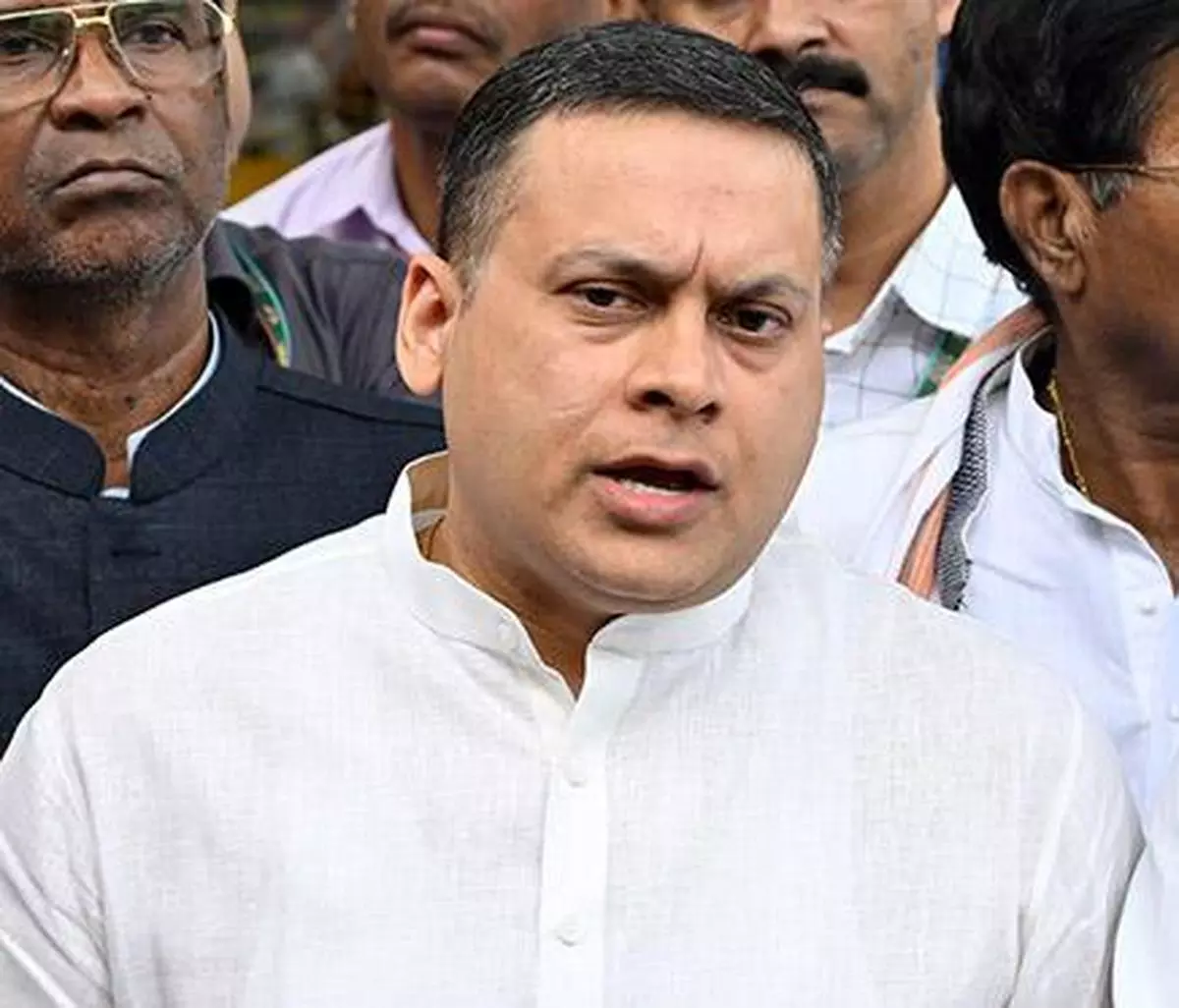

Chennai: The Madras High Court has quashed an FIR registered against BJP IT cell head Amit Malviya over his social media posts criticising Tamil Nadu Deputy Chief Minister Udhayanidhi Stalin for his remarks on Sanatana Dharma, Live Law reported.
Justice G.R. Swaminathan observed that Malviya had merely reacted to the Minister’s speech, and continuing criminal proceedings against him would amount to an abuse of the process of law and cause irreparable harm and injury.
The Court noted that while no case had been registered against the Minister for his speech, it was “painful” that a hate speech case had been filed against a person who merely reacted to it. “This Court with pain records the prevailing situation that the persons who initiate hate speech are let scot-free, but the persons who react to such hate speech are facing the wrath of the law,” it said.
The controversy arose from a 2023 speech delivered by Udhayanidhi Stalin at a conference titled ‘Sanatana Abolition Conference’, organised by the Tamil Nadu Progressive Writers and Artists Association. In his speech, the Minister compared Sanatana Dharma to diseases such as dengue and malaria and called for its eradication. Multiple petitions were subsequently filed against the Minister in both the Madras High Court and the Supreme Court.
The case against Malviya stemmed from his social media posts in which he shared a video of the Minister’s speech and alleged that the remarks amounted to a call for the destruction of Sanatana Dharma and, by implication, its followers. The FIR was filed by K.A.V. Thinakaran, a district organiser of the DMK Advocate Wing in Tiruchirappalli, under Sections 153, 153A, and 505(1)(b) of the IPC.

Malviya approached the High Court seeking to quash the FIR, arguing that he had merely shared a speech already in the public domain and expressed his understanding of it while questioning its object and intent. He contended that the Minister’s speech was grave and could inflame hatred and violence against a large section of the population, and alleged that the case against him was politically motivated.
The prosecution argued that Malviya had distorted the Minister’s speech and spread misinformation by portraying it as a call for genocide against 80 per cent of the population. They alleged that his posts, including those in Hindi, were intended to create enmity between groups and disturb social harmony, and cited that a seer from Ayodhya had announced a reward for beheading the Minister following Malviya’s posts, arguing that this amounted to hate speech.
After examining the material, the Court held that Malviya had not called for any agitation or violence, but had merely placed facts and raised questions. It noted that he had only sought a response from the Minister, which did not attract the offences charged.
The Court also took note of the historical context, observing that the political movement to which the Minister belongs had, in the past, made statements and carried out acts perceived as attacks on Hinduism, including incidents involving the desecration of Hindu idols. It remarked that despite complaints, action had rarely been taken in such cases and noted a long-standing ideological attack on Hinduism by the Dravida Kazhagam and the DMK.
On the Minister’s speech, the Court concluded it fell within the ambit of hate speech, stating that calling for the “abolition” of Sanatana Dharma implied that its followers “should not exist.” “If a group of people following Sanatana Dharma should not be there, then the appropriate word is ‘genocide’. If Sanatana Dharma is a religion, then it is ‘religicide’,” the Court said, adding that the Tamil phrase “Sanathana Ozhippu” could also be understood as culturicide.

The Court held that Malviya, as a follower of Sanatana Dharma and a victim of such speech, had only defended his faith, and his actions did not attract any provision of the IPC. Accordingly, it allowed his petition and quashed the FIR against him.