













Kashmir valley faces water crisis as Jhelum and tributaries recede to record lows
text_fields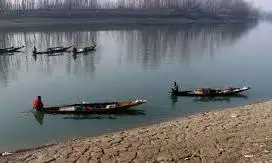

Kashmir is facing a serious water crisis as an unprecedented decline in rainfall and snowfall has pushed rivers, tributaries, and natural springs to critical levels, experts said.
The valley has recorded an 83 per cent rainfall deficit, placing all ten districts in the very low category and deepening concerns about water scarcity.
The Jhelum River, considered the lifeline of the valley, has dropped to record lows. At the Sangam gauge station, the water level has fallen to minus 0.53 feet. At Ram Munshi Bagh, it is around 3 feet, and at Asham, it has reached nearly 1 foot. These levels mark a significant reduction in river flow and have raised alarms about the region’s water balance.
Tributaries are also showing alarming declines. Major sources such as the Lidder, Rambiara, Ferozepora Nallah, and the Pohru River are flowing far below normal, affecting drinking water availability, irrigation networks, and groundwater recharge across the region.
Independent weather analysts note that while the average rainfall for November is 35.2 mm, this year the valley received only 6.1 mm.
The meteorological department has forecast dry weather for the next ten days, with only a possibility of light snowfall in the higher reaches. Environmental experts warn that the lack of precipitation this early in winter could worsen the crisis in the coming months if snowfall remains low.
Long-term studies by the Wadia Institute of Himalayan Geology and ISRO show that over 18 per cent of Himalayan glaciers have retreated in recent decades. This retreat is weakening natural springs and drying up catchment areas that feed important rivers such as the Lidder and Pohru, adding long-term stress to the region’s water resources.
In Srinagar, municipal water supply has already been reduced in several areas due to declining river levels. Experts warn that without immediate measures such as artificial groundwater recharge, rejuvenation of traditional water sources, and comprehensive water planning, Kashmir may face prolonged drought conditions.
An environmental researcher at the University of Kashmir said the situation is unprecedented and that continued decline in snowfall this winter could trigger the valley’s worst water crisis in more than a decade.