














India to overcome toxic air problem by recycling millions of old cars
text_fields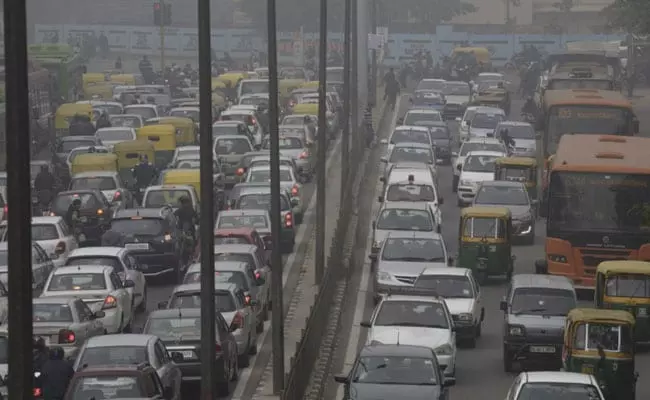

India's effort to clear up world's most toxic air by remove millions of old polluting cars from the roads has been met with several challenges. A new survey has showed that most of the vehicle owners are not interested in changing their automobiles even when it is old.
Of the 10,543 vehicle owners surveyed by LocalCircles, 57% said that age isnot a determining factor as to whether a car should be removed from service or not, rather it should be based on the miles on the odometer. Last year, the government made it mandatory that personal vehicles older than 20 years and commercial vehicles older than 15 years must take a fitness test if they are to continue on the road.
Additionally, more than half of the customers that were surveyed said that due to India's cash-for-clunkers policy, keeping an old vehicle will be more expensive, and therefore plan to reduce the number of cars they own. Since April, authorities have increased the price of auto fitness tests which makes it eight times more expensive for owners of cars older than 15 to renew their registrations.
India's ambition of attaining zero carbon by 2070 might suffer setbacks as there is a lack of interest from the public to eliminate vehicles that increase pollution. The recycling of old cars is crucial for India to reduce the carbon emissions. This is more evident by the fact that electric vehicles have not gained as much popularity possibly due to the shortage of charging networks and expensive battery-powered transportation.
The nation's Center for Science and the Environment (CSE) predicts that by 2025, nearly 20 million older vehicles in India will be approaching the end of their lives, leading to greater environmental damage, NDTV has reported.
The current Modi government has said that it hopes to attract more than $ 100 billion ($ 1.3 billion) in investment with the help of this program, which will also help in preventing the country from relying on other countries for metals. Prime Minister Modi has said that stopping end-of-life vehicles in India is currently unproductive as precious metals are not recycled and energy recovery is close to nothing.
However, automakers seem to be on the side of the public.
"Age is not a good criteria for scrapping a vehicle," Maruti Suzuki India Ltd. Chairman R C Bhargava said in an interview. "The logic has to be the car's ability to ply roads safely so it doesn't put other road users in danger. A vehicle gets scrapped when the user finds it isn't economical to repair it to get a fitness certificate."
R C Bhargava added that every three years, fitness tests must be mandates for personal vehicles. In India, when a car is on the road, there are usually no further inspections to ensure that it meets the safety standards prescribed at the time of sale. He said that from time to time, major accidents are caused by the breakdown of vehicles that do not have the fitness certificates.
Currently, India also requires big scrapping centers right now, recycling is controlled by informal small-scale units. Maruti Suzuki and Toyota Tsusho Corp. have jointly invested Rs 440 million in scraping and recycling over 24,000 end-of-life vehicles per year.
India also needs larger scrapping centers with recycling currently is controlled by informal small-scale units. Maruti Suzuki and Toyota Tsusho Corp. have jointly set up a facility with an investment of 440 million rupees to scrap and recycle over 24,000 end-of-life vehicles annually.
Mahindra MSTC Recycling Pvt., which has recycling facilities in Pune, is manufacturing four more scrapping units with a capacity of 40,000 vehicles per year in the western state of Maharashtra.