


India, Singapore strengthen AI and chip partnerships amid rising US tariffs
text_fields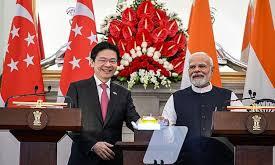

India and Singapore have pledged to expand cooperation in artificial intelligence and semiconductors, signing new agreements on Thursday as New Delhi seeks to widen trade ties and offset the impact of steep US tariffs.
The deals cover a wide range of sectors, including shipping and civil aviation.
Singapore’s Prime Minister Lawrence Wong said both nations also plan to set up state-level skill centers to meet demand in industries such as aviation and semiconductors. Cooperation in chips will go beyond training, extending to research, development, supply chains, and logistics. “These efforts will generate new growth opportunities for both our countries,” Wong said.
During a joint statement in New Delhi, Indian Prime Minister Narendra Modi emphasised Singapore’s role in India’s regional strategy. “Singapore is a strong pillar of our Act East Policy. Tech and innovation are pillars of our relationship,” he said.
The two leaders later shared a hug on stage.
Singapore already accounts for about 10% of global chip production and 20% of semiconductor equipment output, making it a key partner in India’s drive to become a global technology hub. India is preparing to roll out its first domestically produced semiconductors by the end of this year, with partnerships seen as critical for the effort.
Bilateral trade between the two countries reached $34.26 billion in 2024-25, according to official Indian data.
Since 2000, Singapore has been the source of almost one-quarter of all foreign investment in Indian equity, particularly in sectors like manufacturing, finance, and real estate. Ties are further strengthened by Singapore’s ethnic Indian population.
The Singaporean leader’s visit comes shortly after that of German Foreign Minister Johann Wadephul, who expressed confidence that a free-trade agreement between the European Union and India could be concluded as early as autumn. EU countries are seeking closer trade relations with India as US policies raise concerns.
US President Donald Trump’s administration has doubled tariffs on Indian imports to 50% in response to New Delhi’s purchases of Russian oil. The decision surprised Indian officials and has accelerated efforts to secure agreements with other trade partners.