












CM defends move as J-K's Kishtwar order curbing Zakat, Sadaqah sparks row
text_fields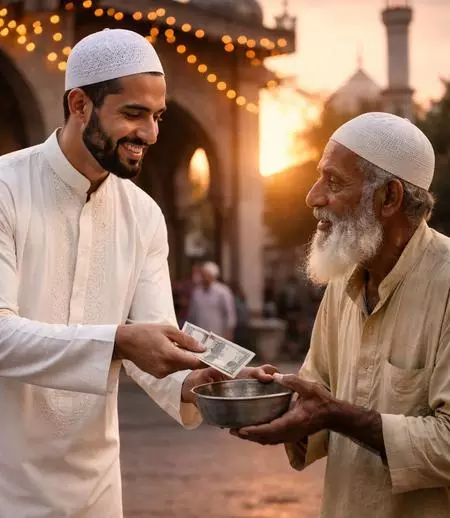

Authorities in Jammu and Kashmir’s Kishtwar district have issued directions to regulate the collection of Zakat and Sadaqah during Ramzan, citing concerns about unauthorised fundraising. The move has sparked a political controversy, with critics calling it an infringement on Muslim religious rights, even as Chief Minister Omar Abdullah said the decision followed consultations with local religious leaders.
Kishtwar Deputy Commissioner Pankaj Kumar Sharma said the administration had a statutory duty to ensure that donations meant for welfare, relief or religious purposes were not misused, laundered or diverted for unlawful activities. He noted in the order that unauthorised collections by certain individuals and groups during Ramzan had been observed, prompting what he described as the need for immediate regulatory action, Siasat Daily reported.
The deputy commissioner said that while Zakat and Sadaqah are integral to the religious and social life of Ramzan, deceptive or fraudulent fundraising practices undermine the sanctity of the holy month and exploit public generosity.
Zakat, one of Islam’s five pillars, requires Muslims to give a portion of surplus wealth to those in need, while Sadaqah is voluntary charity. Contributions typically increase during Ramzan, with madrasas and charitable bodies relying heavily on such donations for social and religious work.
PDP legislator Aga Syed Muntazir Mehdi said the directive amounted to an unconstitutional intrusion, arguing that Articles 25 and 26 protect freedom of religion and the community’s right to manage its own religious affairs. He maintained that charitable obligations like Zakat fall within the sphere of community-led religious practice and should not be subjected to arbitrary state control.
Deputy Chief Minister Surinder Kumar Choudhary cautioned officials against overstepping into religious domains, saying that while transparency and accountability are important, officers must act within constitutional and administrative limits.
Jammu and Kashmir minister Satish Sharma criticised the order as ideologically driven, calling it unfortunate and saying such attitudes among officials needed to change.
Amid a row over an order regulating the collection of donations during Ramzan, Jammu and Kashmir Chief Minister Omar Abdullah on Friday said the decision was taken after consultations with local religious leaders and should not be politicised.
Citing concerns over unauthorised fundraising, the deputy commissioner of Kishtwar had on Wednesday issued an order regulating the collection of donations during the holy month, PTI reported.
Responding to concerns raised by Congress MLAs Gulam Ahmed Mir and Nizam-ud-Din Bhat in the Assembly on Thursday, Abdullah said he looked into the matter and found that the deputy commissioner did not issue the order arbitrarily.
He said all district commissioners had been instructed in advance to engage with local communities and make necessary preparations for Ramzan.
During one such meeting, religious leaders from the Muslim community in and around Kishtwar met the deputy commissioner and highlighted the issue of individuals setting up fake non-governmental organisations during Ramzan to collect donations, the chief minister said.
"They informed the administration that money is often collected in the name of charity or patients whose existence cannot be verified, and there is no clarity on how the funds are actually utilised," Abdullah said, adding that genuine NGOs suffer as a result and are deprived of much-needed support.
Abdullah said religious leaders had specifically requested the deputy commissioner to intervene and put an end to the practice.
"Based on these genuine concerns raised by clerics and community representatives, the deputy commissioner issued the order," he said.
Abdullah further said the Imam of the Jamia Masjid Kishtwar, along with other clerics and religious leaders, has welcomed the move.
Appealing for restraint, the chief minister said not every administrative decision should be viewed through a political lens.
"We should sometimes go into the details. Many decisions are taken after consultations with the people and not on political grounds. Such matters should not be dragged into politics," he said.
Criticising the order, Mir and Bhat had demanded its immediate revocation.