















Centre asks for another week to file a response to petitions challenging sedition law
text_fields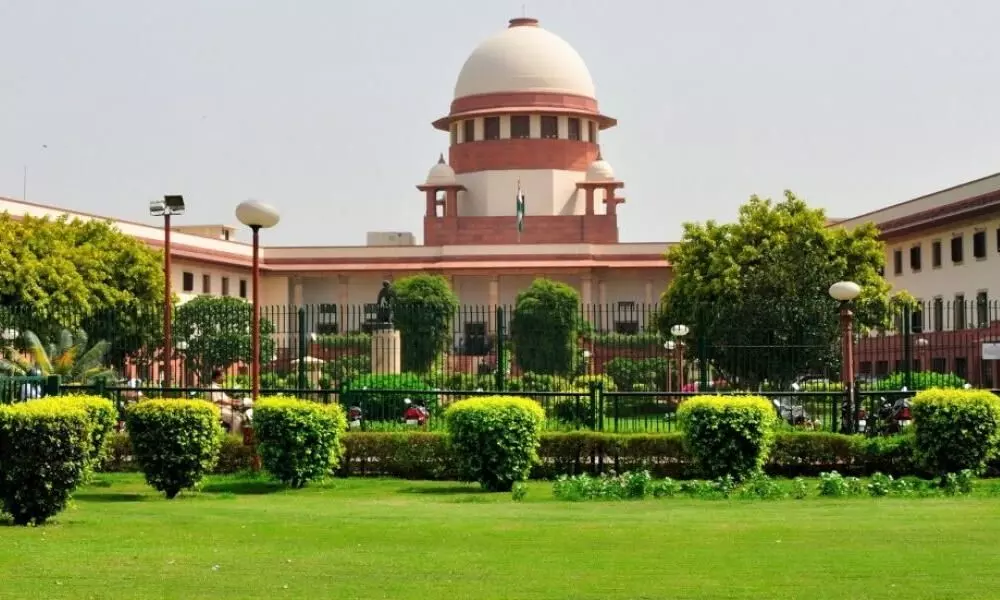

The Centre asked the Supreme Court for another week's time to file a response on the petitions challenging the sedition law. On April 27, the top court had allowed Centre a week's time to deliberate the matter. A hearing was scheduled for tomorrow.
The sedition law carries a maximum sentence of life imprisonment, and the petitions are demanding striking it down. Maj Gen S.G. Vombatkere (retd) and the Editors Guild of India along with others have filed petitions challenging the constitutional validity of Section 124A.
Vombatkere argued that a statute criminalising expression based on unconstitutionally vague definitions of 'disaffection towards government' is an unreasonable restriction on the fundamental right to free expression guaranteed under Article 19(1)(a). He added that the sedition law causes constitutionally impermissible 'chilling effect' on the speech.
The Centre had already sought another day's time on Sunday. The fresh application stated that it is waiting for approval from the competent authority. Last week, Solicitor General Tushar Mehta, representing the Centre told a bench headed by Chief Justice N.V. Ramana that Centre needs two days to finalise the reply.
The bench of CJI N.V. Ramana, Justice Surya Kant, and Justice Hima Kohli said that the Centre will file the reply by the end of this week and listed the matter for final disposal on May 5. The Chief Justice said no adjournment will be granted in the matter as it was last heard in July last year. Attorney General K.K. Venugopal is assisting the court in the matter.
Last year, the Supreme Court had asked the Centre what is the utility of having a sedition law 75 years after independence. CJI Ramana pointed out that it is a colonial law used to silence freedom fighters. The bench also criticised the misuse of the law against people.
The Attorney General suggested that the court lay down fresh guidelines to restrict the misuse of sedition law. He recommended using it for the protection of nations and democratic institutions instead of scrapping the entire law.