
















Over 300 activists criticise Justice Gavai for linking freebies to ‘class of parasites’
text_fields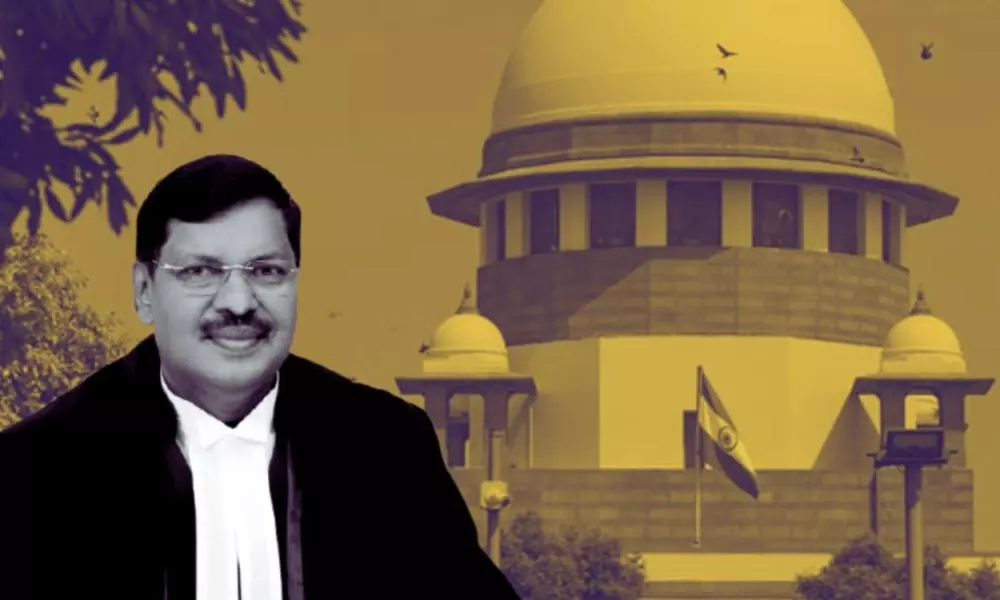

The statement made by Supreme Court judge B.R. Gavai while hearing a plea regarding urban homeless shelters, which linked the issue of 'freebies' to creating a 'class of parasites,' prompted strong condemnation through a statement by about 300 activists, lawyers, journalists, and organisations working with homeless and marginalised people.
The bench, comprising Justice B.R. Gavai and Justice A.G. Masih, was hearing a petition filed by E.R. Kumar when Justice Gavai commented that people receiving free rations were unwilling to work, which, in his view, hindered their integration into mainstream society and limited their contributions to the nation.
During the hearing, advocate Prashant Bhushan countered these remarks by highlighting how existing policies disproportionately favoured the rich, but Justice Gavai dismissed his argument as a "political speech."
The press statement issued in response to these remarks criticised the judge’s statements as reflecting an "anti-poor bias" within the judiciary, stressing that the homeless form the backbone of the urban informal economy and perform hard labour in fields such as construction, sanitation, and catering.
The statement further asserted that calling the homeless "parasites" was indicative of an insensitivity often seen among the powerful and privileged, and it added that a judge tasked with protecting constitutional rights should not be making such remarks.
The statement also pointed out that society and its institutions have a responsibility to protect vulnerable individuals rather than blaming and shaming them, and it noted that preventable deaths among those who build and sustain cities were a matter of national shame.
In a separate open letter, former Rajya Sabha member Brinda Karat criticised another statement by Justice Gavai, in which he cited direct cash transfer schemes for women, such as the "Ladki-Behen" initiative, as an example of "freebies" given out before elections.
She addressed the judge directly, arguing that his assertion that such benefits discouraged work was factually incorrect because the majority of women were already engaged in unpaid labour, either in domestic responsibilities or in family-run enterprises, including agricultural work.
Karat further explained that women’s unpaid labour played a crucial role in family survival and was among the highest in the world, yet it remained unrecognised. She expressed concern that the judge’s remarks reinforced this notion and overlooked the struggles of women who contribute to the economy without receiving wages.
Additionally, she countered his claims about free rations by clarifying that the government’s food distribution scheme provided only five kilograms of cereals per person per month, which was below the national average consumption rate of nine kilograms per month. She also pointed out that food inflation had made it increasingly difficult for families to afford adequate nutrition, and she highlighted that India had the largest malnourished population globally, making food aid a necessity rather than a handout.
Justice Gavai had made similar remarks in previous hearings, including one on January 7, where he criticised state governments for allocating funds to welfare schemes while struggling to pay judicial officers' salaries.
The Supreme Court is set to hear pending petitions regarding the broader issue of political parties promising freebies during elections, and a three-judge bench had been directed to review these pleas in 2022.