

















18 hate incidents documented during Kanwar Yatra, mostly against Muslims: APCR
text_fields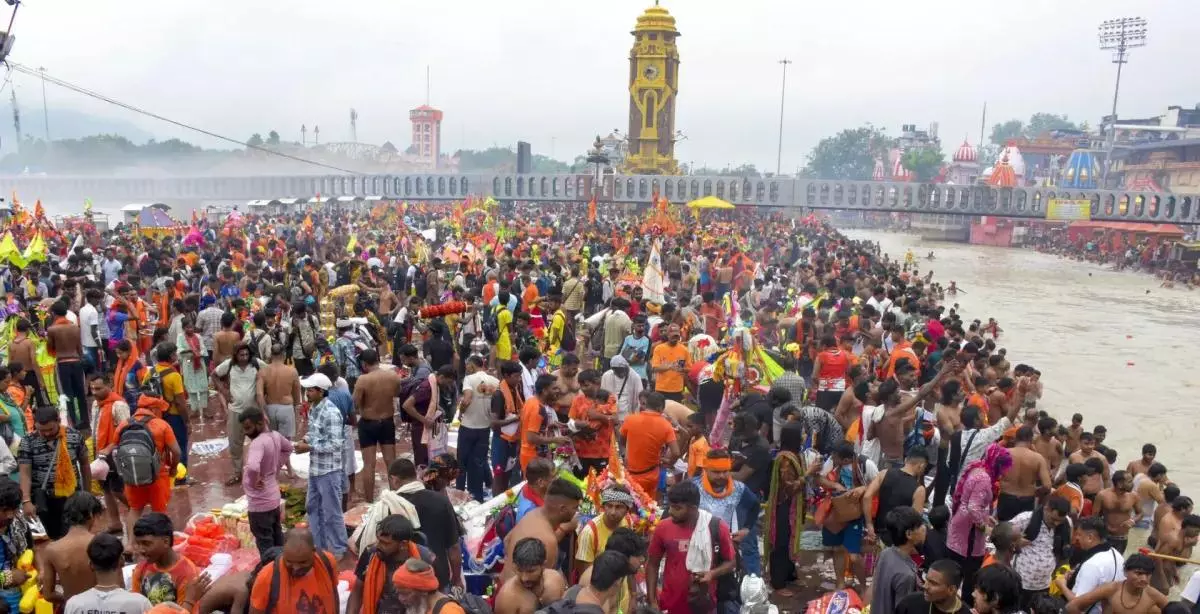
Photo: Maktoob Media

New Delhi: At least 18 incidents involving alleged violence, coercion, discriminatory measures and obscene conduct were documented during and around the 13-day 2026 Kanwar Yatra, according to a report released by the Association for Protection of Civil Rights (APCR).
Titled Kanwar Yatra 2026: Violence, Vigilantism, Boycott and Public Impunity, the report covers incidents reported in Uttar Pradesh, Uttarakhand, Madhya Pradesh, Delhi and Bihar.
According to APCR, its compilation includes nine cases involving physical or coercive violence, at least four instances of boycott or discriminatory measures related to food and businesses, and at least five reported or viral references involving obscene conduct, Maktoob Media reported.
APCR said several of the cases it documented involved Muslim individuals and Muslim-owned businesses. These included allegations of assault and coercion, restrictions on the sale of non-vegetarian food and action against eateries.
The main Kanwar Yatra was held from July 30 to August 11, although incidents associated with the pilgrimage were reported before and after the formal 13-day period.
According to APCR, its primary concern was not religious devotion but what it characterised as differences in the enforcement of public-order measures. The organisation stated that commuters, traders and critics could face coercive action while those acting in the name of religious identity could receive greater accommodation or face delayed accountability. It also said that traffic restrictions and food-related measures could have broader social and economic consequences.
The report identified disputes on roads as a recurring trigger in several of the cases it examined. APCR said some incidents began with minor collisions or contact involving Kanwars and subsequently escalated into assaults, vandalism or disruption of traffic.
In Hapur, the report said that 24-year-old truck driver Azeem Ali was pulled from his vehicle and beaten with a wooden stick by Kanwariyas near the Brijghat toll plaza following a collision involving a parked auto-rickshaw. APCR said the assault occurred in the presence of a police officer and that Azeem died several days later.
Another case cited by the organisation involved a Muslim youth identified as Imran in Ghaziabad. According to the report, a group of Kanwariyas assaulted him and detained him for about 20 minutes after accusing him of touching and damaging their Kanwar. APCR said police attempted to calm the situation by arranging a fresh consecration ritual for the Kanwar rather than taking action against those accused of assault.
In Rampur, the report said that a Muslim motorcyclist was made to apologise and touch the feet of Kanwariyas after he entered a road designated for the procession. Police subsequently disputed claims that the confrontation had been triggered by damage to a Kanwar, with the local police outpost chief stating that no Kanwar had been damaged.
The report also referred to an FIR registered in Uttar Pradesh against All India Imam Association president Maulana Sajid Rashidi after he criticised the conduct of some Kanwariyas. Rashidi questioned whether people accused of assaulting police personnel and damaging a school van could be described as Shiva devotees. He subsequently clarified that his remarks were not intended to refer to all participants in the Kanwar Yatra.
APCR also highlighted food and business-related restrictions as a recurring issue during this year's pilgrimage. The report particularly examined measures affecting Muslim-owned businesses and restrictions on the sale of non-vegetarian food along Kanwar routes.
In Baheri, Uttar Pradesh, a chicken biryani shop located near the main Kanwar route was demolished, while its owner, Mohd Salman, was detained after Bajrang Dal workers complained about the sale of non-vegetarian food. Police described the detention as a preventive measure following a disturbance of public order.
The report also documented orders in several areas restricting or suspending the sale of meat, fish and eggs along Kanwar routes. Uttar Pradesh ordered such shops to remain closed along designated Kanwar routes from July 25, while similar restrictions were reported in Hapur and Delhi. Muzaffarnagar and Shamli also implemented temporary closures affecting meat shops and restaurants along pilgrimage routes.
APCR said the restrictions extended to a Muslim religious gathering in Bareilly. According to the report, the historic Urs-e-Ala Hazrat was rescheduled after coinciding with the Kanwar Yatra, and organisers were directed to serve only vegetarian food.
The report also referred to the Supreme Court's July 22 intervention concerning directives issued by the Uttar Pradesh and Uttarakhand governments that required eateries along the Kanwar route to display the names and other details of owners and staff. The court directed authorities not to make such disclosure compulsory.
The APCR report separately documented at least five videos or reports concerning alleged obscene conduct during the Kanwar Yatra. These included footage showing young men and boys making vulgar gestures and performing provocative dances during processions.
According to APCR, several of the videos circulated on platforms such as Instagram and YouTube. The organisation characterised the wider atmosphere around some processions as involving loud music, all-night celebrations and limited intervention by authorities.