












Five Iranian films make it to Venice Film Festival amid government's crackdown
text_fields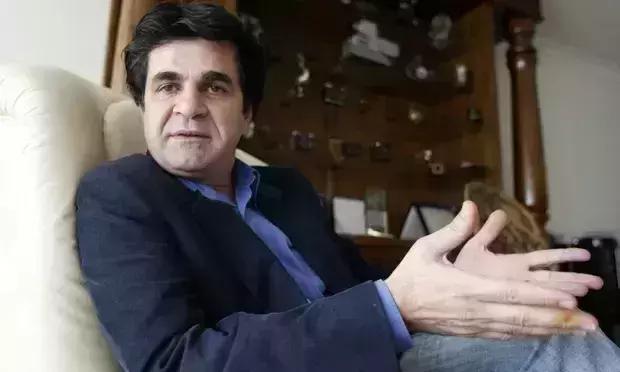

Five Iranian films have made it to Venice's international film festival despite the restrictions the government imposes. Two of them are in competition.
Venice Film Festival's chief Alberto Barbera told Variety that they have never received so many submissions from Iran and many of them are good. He added that this is happening at the same time when the Iranian regime is being one of the most conservative and repressive in the world.
Iranian director Jafar Panahi's latest film 'No Bears" is set to launch on the prestigious global stage. "Fellow dissident filmmaker Mohammad Rasoulof and others are also trying to freely express their opposing points of view."
Barbera described No Bears to be a film that interweaves two parallel stories where the lovers face hidden obstacles, including the force of Iranian superstition and the country's power dynamics. "It's Panahi's best film in a decade." It is also worth noting that it is not a political film but a romance. Khers Nist (No Bears) is in competition for Venice's top Golden Lion Prize.
Panahi and Rasoulof in a joint statement said that the hope of creating existing is a reason for existing. They highlighted that independent cinema reflects its own times and draws inspiration from society. Both filmmakers have been in jail since July as the Iranian government came down hard on dissident voices in all sectors of society.
Houman Seyedi, whose film 'World War III' is premiering in Venice's Horizons section, said in his directorial statement that societies ruled by totalitarian regimes are the most effective creators of anarchists. He added that he has always wondered how much longer there can be tyranny and oppression in the world.
50-year-old Rasoulad was arrested for launching a petition from film directors and actors asking security forces to lay down arms amid protests. 62-year-old Panahi was arrested for seeking information on Rsaulad's whereabouts. The two are among the many artists the government has put behind bars.
Their statement said those in power see them as criminals. They further said the history of Iranian cinema witnesses the constant and active presence of independent directors who have struggled to push back censorship and ensure the survival of this art. "Some were banned from making films and others were forced into exile or reduced to isolation," they added.
Vahid Jalilvand is returning to the Festival for the third time and his film "Beyond the Wall" is in competition. He said: "Somehow there is more potential in suffering. There are more dilemmas, so there is more drama. Maybe in other countries in the West or in the U.S., artists have to look for drama. But in Iran, drama is there. We just have to find it and collect it."
Despite the government's crackdown, Iranian cinema is having a particularly good year. Many had good showings in Berlin, Cannes and Karlovy Vary. Leila Hatami, star of Cannes festival jurist Asghar Farhadi's 'A Separation' is a member of Venice's jury panel.