


















Is JNU going to dogs, thanks to cows?
text_fields
We are not born stupid but ignorant; it is education, wrongly imparted, that makes us stupid—this was what Bertrand Russell said long ago. When he said thus, he certainly must not have meant the kind of education that our Sanghi men had in mind. For the Sanghi educational vision is not meant to turn one into an idiot; it is meant to fill us with pride and patriotism. Even those of us who have not had the benefit of such a system know the virtues of it since Modiji and his elite bunch of ministers are determined to leave no stones unturned in wising us up about it.
Accordingly we know that Indians had invented aeroplanes not one or two years but many millennia before Wright brothers managed to fly a measly distance of 260 metres in their contraption. If we owe this bit of information to Capt. Anand J Bodas, one of the personages who spoke at the National Science Conference held in Mumbai two years ago, there are other bits of information that will titillate any Indian with at least an iota of national pride in him and we owe them to mightier minds. It was Prime Minister Modiji himself who enlightened us of cloning in ancient India, much before Ian Walmut, the Scottish guy managed the feat with an unsurvivable she-sheep. Thus Indians cloned a great hero called Karnan and performed a miraculous plastic surgery to graft an elephant with a human and called him a god and hired a rodent to carry him across land and water.
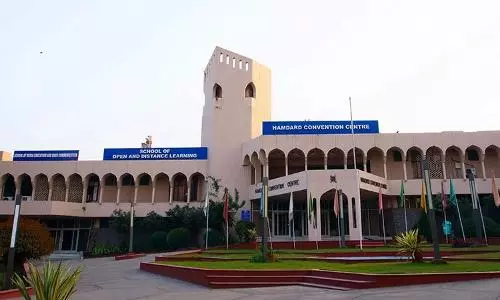
 If you wonder about this sudden outpouring of Desi wisdom, kindly excuse me for extruding a bit of autobiography. It has been almost a month since, but the hangover still persists. I had the good fortune of spending a whole month listening to some of the brightest social scientists of India at no less a place than Jawaharlal Nehru University. The occasion: a Refresher course organized by the Human Resource Development Centre JNU for young social scientists. The course itself was business as usual.
The seasoned ones among us were not particularly disillusioned since their gray hairs had taught them of the dangers of nursing illusions about great institutions. As for the hundred hour plus lectures, most of them were mediocre, a few refreshing and a couple outstanding. For example, there was Satish Deshpande whose analysis of the casteist structure of Indian society was equally revealing and revolting. According to the globally reputed sociologist, the pernicious effects of caste are not a thing of the past, nor are they something felt only at certain levels. The fact is that caste pervades all walks of Indian society and institutions of higher education are no exception. Our bigotry has reached such dangerous proportions that even the visibility of the minorities is something that our caste hierarchy finds unable to brook. As a result, the presence of minorities in institutions of national importance and central universities is even lower than that of Dalits. The biggest success of India’s upper class lies in its ability to camouflage its overrepresentation in the academia and institutions of power. In fact, Brahmins represent India’s most pampered minority, Deshpande expounded with the help of clear statistics.
.jpg) The theme of the conference was Indian Sociology. And the leftist intellectuals, did not really miss the opportunity to drive home the point that nation state itself is a modern conception, a colonial contraption, a non-being that has its genesis in ancient tribal leanings and modern thirst for power and pelf. Citing history, they drove home what Rushdie had so famously expressed through his umpteen statements like: Before the midnight there was nothing called India. It is a collective dream we all have agreed to dream; it is a collective fantasy, a myth etc. In other words, according to this reasoning, nation is nothing but imagiNation or rather a mere halluciNation. As for India, the state as we know it, they said there was nothing like it before an act of the British parliament decided to conjure it out of the hat. However, the experts had no doubt on something more crucial: though India as such was an imagined reality, Indian Sociology was something real, alive and kicking (indeed it doesn’t take a lot of sociological learning to know which side of one’s bread is buttered)
The theme of the conference was Indian Sociology. And the leftist intellectuals, did not really miss the opportunity to drive home the point that nation state itself is a modern conception, a colonial contraption, a non-being that has its genesis in ancient tribal leanings and modern thirst for power and pelf. Citing history, they drove home what Rushdie had so famously expressed through his umpteen statements like: Before the midnight there was nothing called India. It is a collective dream we all have agreed to dream; it is a collective fantasy, a myth etc. In other words, according to this reasoning, nation is nothing but imagiNation or rather a mere halluciNation. As for India, the state as we know it, they said there was nothing like it before an act of the British parliament decided to conjure it out of the hat. However, the experts had no doubt on something more crucial: though India as such was an imagined reality, Indian Sociology was something real, alive and kicking (indeed it doesn’t take a lot of sociological learning to know which side of one’s bread is buttered)
These things did really rub the Sanghis among the participants the wrong way and they did let out their steam on a couple of occasions. But the Sanghis had much to cheer about during the otherwise pedestrian proceedings. JNU Vice Chancellor Jagdesh Kumar who inaugurated the event, dressed in a befitting saffron kurtha, and HRDC director Atul Kumar Johri made notes that were all music to Sanghi ears. Though Dr. Kumar could not quite match the exuberance or verve of his Kargil Martyrs memorial speech in which he made the innocuous demand for installing a military tank on the campus, his address was not bereft of nationalist melancholia. And where he went short, his trusted deputy Johri filled in the gap. Johri, the director, as I learnt from JNU students and later from old newspaper reports, had proven his mettle and muscle by even physically intervening to muffle student protests and dissent on the campus. In his speech he effused lavish praises on both Modiji and Vice Chancellor Jagadesh Kumarji. The man of science described the director’s generosity in allotting funds to HRDC with all literary flourish he could summon. What was remarkable was not the school-boyish tone that made it sound that the money the Director granted came directly from the venerable man’s bottomless pocket, but the art of sycophancy that was supremely crafted to perfection.
 As for the great strides that JNU had made under the Vice Chancellor, none of the participants had to go far. A few hundred meters walk down to the towering central library building (recently christened as Ambedkar Library) is all that takes to convince one that the VC is more serious about tanks on the campus than books and learning. The conspicuous absence of many crucial volumes and a whole assortment of junk furniture and musty volumes stacked on the multiple floors tell the tragic tale of a once vibrant and happening place going to seeds. The students on the campus told us of the messy state of the library. As a technocrat, the VC, they said is more interested in bringing engineering courses to the university than strengthening the infrastructure for humanities or pure science research. Indeed, the VC has a point or two in giving humanities a cold shrift: humanities students keep on parroting about human rights, a topic anathema to him and his masters.
For the teachers who attended the course, the Centre was not a place furnished with facilities one expected in JNU with such a benevolent VC as the Director wanted us to believe. The Wifi-system was erratic; the computer lab at HRDC was using pirated software and giving continuous trouble; the teachers had to rough it out in the boiling Delhi heat in rooms with vedic-era fans functioning half-heartedly, making more noise than Smriti Irani. Not that there weren’t air-conditioned rooms but they were earmarked for the participants of an ABVP event complete with yoga and mantra. Who can fault the Director? How can any true patriot allow a bunch of thumb-sucking young Sangis to wallow in the heat and allow young social scientists with incorrigible leftist leanings to lounge in air-conditioned rooms?
 The schedule of the lectures was hastily prepared with a litany of overlapping sessions that rendered it a worthwhile exercise in Tautology rather than Sociology; but the Director sought to redress this by making it mandatory for all the participants to audit a well-organized ABVP event, attended among others by union ministers. Though this triggered protests from participants including JNU faculty, the general mood was largely one of resigned acceptance and compliance. Indeed the threat of the tank has worked and the fear was palpable.
Vice Chancellor Jagadesh Kumar can indeed pat himself on the back. His tank suggestion was certainly meant to drill fear into an academic community that developed the bad habit of asking uncomfortable questions. The not at all hidden message behind the tank rhetoric was not lost on us who queued up to sign the attendance register kept at the event and personally monitored by the Director (For a moment, I even failed to imagine the racket the Sanghis would ratchet up had a Leftist Vice Chancellor asked them to attend a conference organized by SFI or AISF): dissent at your own risk; like Ahmed Najeeb we will simply blot you out; the tanks will make sure that not even your ghosts would find peace in Modiji’s India.
 This new brand of intolerance and authoritarianism was evident in everything from language to gestures. Despite a large number of non-Hindi participants, former Union Minister Sanjay Paswan and Delhi University HRDC director Geetha Sing, chief guests at the conclusion ceremony, delivered long speeches in Hindi (Let us not forget that now it is mandatory to submit all dissertation topics in Hindi too at JNU). When a Tamil teacher beside me asked his North Indian friend to translate, the reply was sharp: why do you want me to translate all this bullshit?
He was wrong. From the little bit of Hindi, I understood it was not all bullshit. The visiting director of DU was talking about cows and cow-dung and all the ‘scientific’ stuff about their medicinal, material and spiritual properties. But unfortunately those sincere words only left die-hard leftists cynics grumbling: What is the guarantee that they won’t be serving some cow-dung delicacies and patties in the canteen today? How true are the words of the late EV Ramaswami Naicker. The witticist had wisely said: As long as there is any Left left in India, there will be no hope left for India!!!
Cow dung patties or whatever, for me, there was something refreshing to take home from the month long course: Education simply provides no immunity against idiocy.
(Dr. Umer O Thasneem teaches English at the University of Calicut. The views expressed here are personal. He may be contacted at outcry2020@gmail.com)