


Elon Musk's SpaceX rocket creates a hole in Earth's ionosphere, raises concerns for GPS systems
text_fields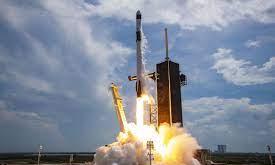

Hawthorne: Falcon 9, a rocket launched by Elon Musk's SpaceX, has punched a temporary hole in the ionosphere surrounding Earth. The rocket is known for its reusability and reliability. It took off on July 19 from the Vandenberg Space Force Base in California, marking its 240th launch and 198th landing.
Photos from the launch captured a faint red glow, catching the attention of space physicist Jeff Baumgardner from Boston University. After analysing the footage, Baumgardner confirmed that the red glow indicated the creation of a hole in the ionosphere, reported spaceweather.com.
"This is a well-studied phenomenon when rockets are burning their engines 200 to 300 km above Earth's surface," explained Baumgardner. "I reviewed footage from the July 19th launch. It shows the second stage engine burning at 286 km near the F-region peak for that time of day. So, it is quite possible that an ionospheric 'hole' was made."
The ionosphere, situated on the edge of space, contains charged particles called ions. It plays a crucial role in generating auroras during geomagnetic storms, as solar plasma interacts with ions to produce the stunning colors seen in the sky.
The ionosphere reflects and modifies radio waves used for communication and navigation. Any disruptions to the ionosphere, such as holes caused by rocket launches, can impact GPS systems and alter location accuracy by a few feet. However, the impact of this particular incident on GPS systems was not significant, reported Newsweek.
Looking to the future, as more powerful rockets are developed and launches become more frequent, there is a concern that the impact on the ionosphere may worsen, leading to more significant effects on GPS systems, warned experts. Charles CH Lin of the National Cheng Kung University in Taiwan highlighted the need to pay attention to these developments, especially as rocket launches become commonplace.
This is not the first time such an event has occurred with the Falcon 9 rocket.
In a previous launch on August 24, 2017, carrying the FORMOSAT-5 payload, a similar incident resulted in a hole being ruptured in the ionosphere's plasma. The same occurred during the Falcon 9 rocket's launch on June 19, 2022, according to Science Times.
With space exploration gaining momentum, understanding and mitigating the effects on our planet's atmosphere will be crucial for sustainable rocketry and preserving critical technologies like GPS navigation.