

















Oceans change colour, research suggests link to climate change
text_fields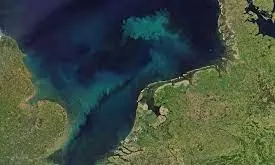

Scientists have observed notable shifts in the colours of over half of the world's oceans. Researchers think there is a connection between climate change and the changing marine ecosystem.
Findings highlight the crucial role of tiny plankton, the foundation of the marine food web, and a significant factor in atmospheric stabilisation. The study, published in Nature, reveals colour variations spanning an area larger than the Earth's total land area, indicating substantial changes in ecosystems.
Lead author B.B. Cael from Britain's National Oceanography Centre explained the significance and said, "The reason we care about the colour changes is because the colour reflects the state of the ecosystem, so colour changes mean ecosystem changes," reported AFP.
From a satellite perspective, the colour of the oceans provides insights into the upper layers of water and the life within it.
Deep blue hues indicate a lack of activity and greener waters suggest increased activity, primarily driven by photosynthesizing phytoplankton. These microorganisms, similar to plants, contain the green pigment chlorophyll and play a crucial role in oxygen production, the global carbon cycle, and the marine food web.
Researchers aim to develop effective methods for monitoring ecosystem changes to track climate variations and establish protected areas. However, previous studies suggested that detecting trends in ocean chlorophyll would require three decades of monitoring due to annual fluctuations.
In the latest study, scientists expanded their analysis by examining seven hues of ocean colour using data from the MODIS-Aqua satellite between 2002 and 2022.
These subtle colour changes, imperceptible to the human eye, would mostly appear blue in nature. By comparing the observational data with computer models simulating the impact of climate change, the researchers found a close correlation between real-world observations and predicted changes.
Co-author Stephanie Dutkiewicz from MIT's Department of Earth, Atmospheric and Planetary Sciences at the Center for Global Change Science said, "I've been running simulations that have been telling me for years that these changes in ocean colour are going to happen. To actually see it happening for real is not surprising, but frightening. And these changes are consistent with man-induced changes to our climate."
Further investigation is needed to determine the exact implications of these colour changes. But researchers strongly suggest that climate change is the likely cause.