















Astronauts achieve a 98% water restoration rate by recycling sweat and urine
text_fields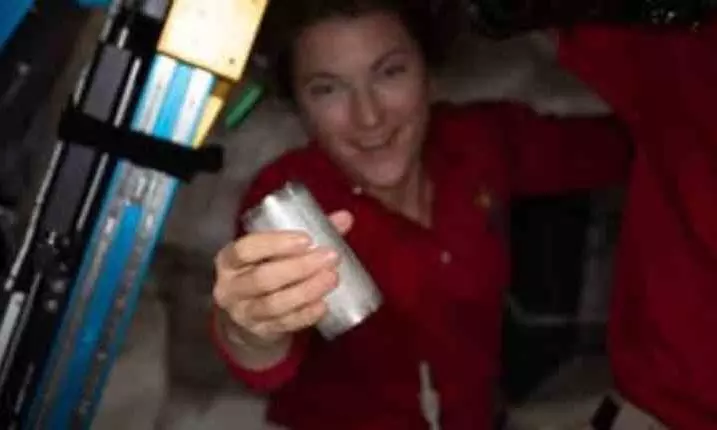

Astronauts on the International Space Station (ISS) have achieved a remarkable water restoration rate of 98%, marking a significant breakthrough in space exploration. They have been recycling sweat and urine to get to this point.
This achievement holds immense potential for future missions and highlights the progress made in recycling vital resources. The space agency utilised a system that effectively converts astronauts' urine and sweat into drinkable water, reported Space.com.
"The processing is fundamentally similar to some terrestrial water distribution systems, just done in microgravity," explained Jill Williamson, ECLSS water subsystems manager. She added that the reclaimed water is meticulously filtered and cleaned. It surpasses the quality of drinking water on Earth.
The impressive water recovery rate was made possible through the implementation of subsystems within the Environment Control and Life Support Systems (ECLSS). The ECLSS aims to regenerate or recycle consumables such as food, air, and water for sustained use in space. On the ISS, each crew member requires approximately a gallon of water per day for drinking, food preparation, and hygiene purposes. The ultimate objective has been to recover 98% of the initial water supply brought on board at the start of extended missions.
The Water Recovery System, a crucial component of the ECLSS, collects wastewater and channels it to the Water Processor Assembly (WPA), where it undergoes treatment to produce drinking water. An innovative element within the system employs advanced dehumidifiers to capture moisture released into the cabin air from crew respiration and perspiration. Additionally, the Urine Processor Assembly (UPA) extracts water from urine using vacuum distillation.
However, this process generates brine as a by-product, which still contains some residual water. To address this, a Brine Processor Assembly (BPA) was introduced alongside the UPA to extract the remaining wastewater.
Christopher Brown, a member of the team at Johnson Space Center, highlighted the effectiveness of the BPA in increasing the amount of clean water recovered from urine from 94% to 98%. He described this achievement as a significant advancement in the evolution of life support systems, emphasising the ability to continuously recycle water in microgravity.