










SC refuses to ban novel 'Meesha', seeks translation
text_fields
The Supreme Court has refused to stay the sale of ‘Meesa’ (The Moustache), a Malayalam novel that has been in the news for offending certain organisations in Kerala, pending further deliberations.
Hearing a public interest litigation filed by Delhi-based Malayali N Radhakrishnan, a bench headed by Chief Justice Dipak Misra asked for a translation of the parts that the petitioner found objectionable.
The translation has to be submitted to the court within five days.
The novel, written by young novelist S Harish, had offended certain conservative Hindu organizations, who have unleashed a campaign against the author and the publisher.
The dialogue has been highlighted as being objectionable by some who believe that it shows women, especially upper caste Hindu women who go to the temple every day, in a poor light.
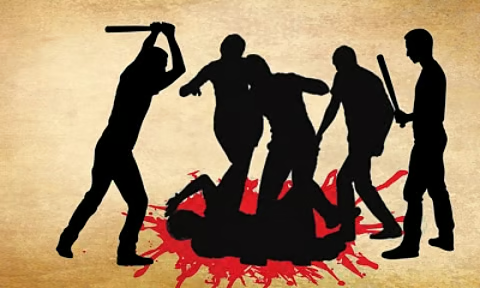
The offended organizations have issued threats to both the novelist and the publisher of the book, Ravi DC of DC Books, warning them of dire consequences. Copies of the books have been burnt in public, and the publisher’s family has been threatened.
Ravi DC has defended the decision to publish the book saying Malayalam literature is no stranger to such dialogues, and that the content of the novel is tame compared to what has been found acceptable for publication so far.
In its first hearing on the matter today, the Supreme Court too seemed to be of the opinion that much is being made out of a molehill.
“(At first glance,) it appears to be the conversation between two young persons in a novel,” the court observed today. “Isn’t it normal for youngsters to talk like this,” it asked.
The court also noted that asking for a novel to be banned on such bases could set a bad precedent, ordering for a translation of the objectionable parts.