



















Rajasthan assembly passes minimum income guarantee bill ensuring social security measures
text_fields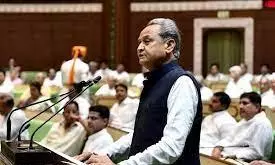

Jaipur: The Rajasthan Assembly has passed a landmark bill, the Minimum Income Guarantee Bill, 2023, which guarantees 125 days of work per year for all families in the state. It also ensures a minimum pension of Rs 1,000 per month for the elderly, specially-abled individuals, widows, and single women.
Chief Minister Gehlot refuted accusations of doling out "freebies" and emphasised that social security is a right of every person in the state and the country. He stated that it is the responsibility of every government in a democracy to provide social security to its residents. Minister Dhariwal believes that this historic law will provide relief to the common man amid skyrocketing inflation.
The pension amount will increase by 15% annually.
Chief Minister Ashok Gehlot's government is aiming to strengthen social security and build on the success of the Congress in Karnataka, where it recently came to power after making five guarantees, including free electricity and Rs 2,000 monthly assistance to the woman head of each family. The Minimum Income Guarantee Bill consolidates the urban employment guarantee scheme, the rural employment guarantee scheme, and the pension scheme into one umbrella legislation, to be known as the Mahatma Gandhi Minimum Income Guarantee Scheme.
The Rajasthan Platform-based Gig Workers (Registration and Welfare) Bill, 2023, has been introduced in the assembly, intending to provide social security to gig workers through a Rs 200-crore fund. Discussions on the gig workers' bill will occur on Monday.
Parliamentary Affairs Minister Shanti Kumar Dhariwal explained that under this legislation, rural families in the state will receive an additional 25 days of employment through the Mukhyamantri Gramin Rozgar Guarantee Yojana after completing 100 days of employment under the Mahatma Gandhi National Rural Employment Guarantee Act (MGNREGA). Urban families will also be guaranteed 125 days of employment under the Indira Gandhi Urban Employment Guarantee Scheme.
The bill ensures a minimum pension of Rs 1,000 per month for the elderly, specially-abled individuals, widows, and single women, with an automatic increase of 15% annually (5% in July and 10% in January).
Sources indicate that the government passed the bill to ensure that regardless of which party comes to power in the upcoming elections, these social welfare measures will be implemented and will become part of an Act, making it difficult for future dispensations to shut down these schemes.