















Gujarat, Tamil Nadu see massive voter deletions in Phase 1 of electoral roll revision
text_fields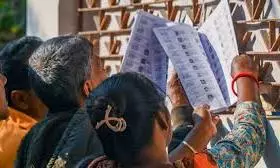

The first phase of the Special Intensive Revision (SIR) of electoral rolls has led to large-scale deletions in Gujarat and Tamil Nadu, triggering political concern over the magnitude of exclusions ahead of upcoming elections.
In Gujarat, around 73.7 lakh voters have been removed from the electoral rolls.
According to official data, 85.5% of electors submitted Enumeration Forms (EFs) during the revision exercise, while the remaining voters were excluded. Of those removed, 51.86 lakh (10.2%) were marked as “shifted” or “absent”, 18.07 lakh (3.55%) were recorded as deceased, and 3.81 lakh (0.75%) were found to be enrolled at multiple locations.
Similarly, the release of draft voter rolls in Tamil Nadu resulted in the deletion of 97.28 lakh electors.
The state saw 5.43 crore electors submit EFs, reflecting 84.81% coverage. Among those excluded, 66.4 lakh (10.36%) were categorised as shifted or absent, 26.9 lakh (4.2%) were marked deceased, and 3.98 lakh (0.62%) were identified as duplicate enrolments.
Election officials have defended the exercise as a routine clean-up aimed at removing duplicate entries, deceased voters, and non-residents to ensure the accuracy of electoral rolls. They clarified that electors found enrolled in multiple places will be retained at only one location, in line with electoral rules.
The Election Commission (EC) has stressed that eligible voters who were excluded can still seek re-inclusion during the claims and objections period by submitting the required documents. The EC has also extended deadlines in seven states, including Uttar Pradesh and Kerala.
Political parties, however, are keeping a close watch on the process, warning that such large-scale deletions could suppress voter participation if genuine electors fail to restore their names in time.
At the national level, opposition parties have alleged that the pan-India SIR exercise is being misused to influence election outcomes, a charge strongly denied by both the Election Commission and the BJP. The EC has maintained that it is constitutionally empowered to periodically revise electoral rolls — an argument upheld by the Supreme Court — while the BJP has pointed to elections it has lost as evidence against claims of manipulation.
Earlier this week, the first SIR list in West Bengal was also released, showing the deletion of around 58 lakh names, adding to the growing debate over the impact of the revision exercise nationwide.