





Former High Court Judge CS Karnan Dies at 71
text_fields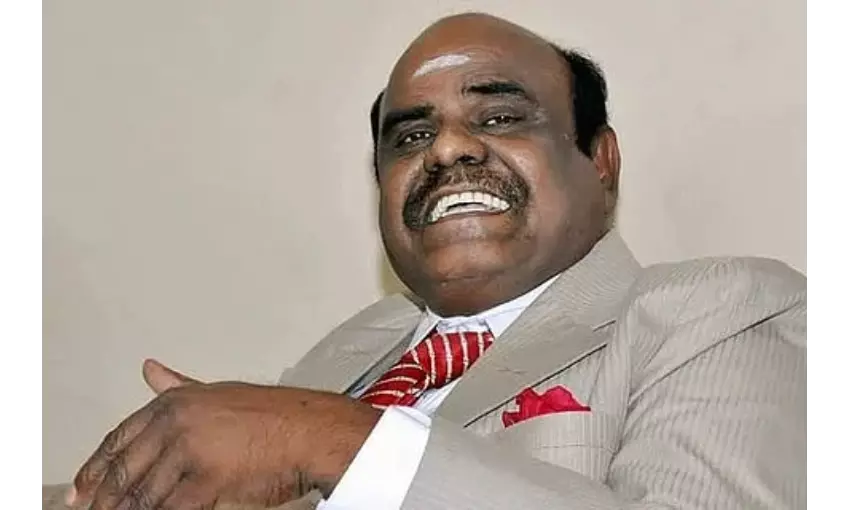

Chennai: Justice CS Karnan, whose career in India's higher judiciary was defined by public allegations of caste prejudice and corruption, has died in Chennai at the age of 71.
The former judge of the Madras and Calcutta High Courts passed away on Friday morning after a recent period of hospitalisation. He had been undergoing treatment for health-related complications but did not respond to medical care.
Karnan was among the few Dalit judges to serve in India's High Courts. Throughout his judicial career, he repeatedly alleged that he faced discrimination because of his caste and accused senior colleagues of misconduct. His supporters regarded him as a rare voice from within the system who questioned entrenched privilege, while critics argued that his conduct undermined judicial discipline.
He remains the only sitting High Court judge in the country to have been jailed for contempt of court.
Karnan was born in 1955 in Karnatham village in Tamil Nadu's Cuddalore district. The second of eight children, he was named Karunanidhi at birth. His father, Swaminathan, was a teacher and school headmaster who had received the President's Award.
In 1991, at his wife Saraswati's suggestion, he changed his name to Karnan. He studied law at Madras Law College, graduating in 1983, before entering legal practice.
His judicial career began in March 2009, when he was appointed an additional judge of the Madras High Court. Two years later, in March 2011, he was confirmed as a permanent judge.
Karnan's time on the Madras High Court bench was marked by a series of public confrontations. In November 2011, he alleged that fellow judges were targeting him because he was Dalit. He later levelled similar accusations against then Chief Justice Sanjay Kishan Kaul.
In 2014, he disrupted court proceedings to object to the names suggested for elevation to the High Court, adding to the growing tensions between him and the judicial establishment.
The Supreme Court transferred him to the Calcutta High Court in March 2016. Rather than complying, Karnan issued an order staying his own transfer, an unprecedented move that escalated the dispute.
The conflict reached a turning point in January 2017, when Karnan wrote to the Prime Minister alleging corruption against 20 serving and retired judges. The Supreme Court responded by taking suo motu cognisance and initiating contempt proceedings.
As the case progressed, Karnan passed orders sentencing and fining Supreme Court judges. On May 9, 2017, a seven-judge bench headed by then Chief Justice JS Khehar found him guilty of contempt and sentenced him to six months in prison. The court held that his actions had seriously obstructed the administration of justice.
Karnan refused to surrender. He retired on June 12, 2017, while still evading arrest, but was later apprehended in Coimbatore. He served his sentence in Kolkata's Presidency Jail and walked free in December 2017.
After his release, Karnan entered politics. In May 2018, he floated a political party and announced his intention to contest the 2019 Lok Sabha elections.
His troubles with the law continued. In December 2020, Chennai police arrested him over a video in which he allegedly made objectionable comments about judges and women judicial officers. The Madras High Court denied him bail in February 2021, although conditional bail was granted the following month.
In December 2024, the Madras High Court rejected a 2011 petition that had sought to stop him from publicly criticising constitutional institutions and the judiciary.
Karnan's death has reignited debate over his place in Indian judicial history. The Supreme Court's contempt ruling and his unconventional conduct remain central to how many within the legal fraternity remember him.
Yet for others, he symbolised resistance within a system where marginalised communities have long been underrepresented. Soon after news of his death spread, tributes poured in on social media, with many recalling him as a judge who refused to remain silent on caste and corruption inside India's courts.