


ECI rejects claims of duplicate voters in Bihar draft rolls
text_fields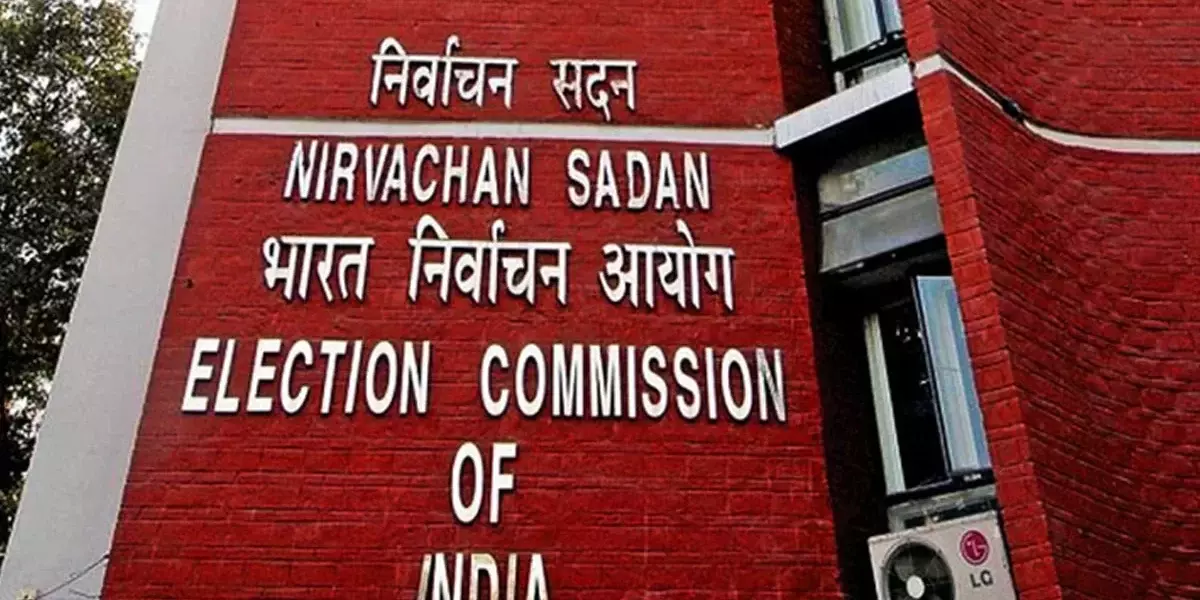

New Delhi: The Election Commission of India (ECI) has strongly rebutted a recent media report alleging widespread duplication in Bihar’s ongoing Special Intensive Revision (SIR) of electoral rolls.
In a detailed statement on Sunday, the Chief Electoral Officer (CEO) of Bihar emphasised that the draft rolls published under the SIR 2025 are provisional and intended specifically for public scrutiny.
“Any alleged duplication at this stage cannot be construed as a final error,” the CEO clarified on X, noting that the law provides mechanisms for objections, verification, and correction before the final publication of the rolls.
Addressing the figure of 67,826 “dubious duplicates” cited in the report, the CEO said it “is based on data-mining and subjective matching of name, relative, and age combinations,” adding that “these parameters, without documentary and field verification, cannot conclusively prove duplication.”
The statement highlighted that in rural Bihar, multiple individuals often share identical names and ages, rendering purely digital extrapolations unreliable.
The ECI noted that its ERONET 2.0 system flags probable duplicates as Demographically Similar Entries (DSEs), which are removed only after field verification by Booth Level Officers (BLOs) and Electoral Registration Officers (EROs). Citing examples from Valmikinagar, officials said numerical claims alone cannot establish factual duplication without detailed verification reports.
Individual cases, such as “Anjali Kumari” from Triveniganj and “Ankit Kumar” from Laukaha, were described as clerical or migration-related errors, both of which have already been corrected through Form 8 submissions.

The Commission also dismissed claims that making electoral rolls “non-scrapable” undermined transparency, calling it a safeguard under Rule 22 of the Registration of Electors Rules, 1960, in line with Supreme Court directions in Kamalnath vs ECI (2018).
Reiterating statutory safeguards, the CEO underlined that Section 22 of the Representation of the People Act, 1950, empowers EROs to delete duplicates. “The draft roll is subject to continuous scrutiny, objections, and statutory corrections until the final list is published,” the statement added, calling the report’s claims that the SIR “facilitates fraud” or that duplicates will decisively impact elections “speculative, premature, and contrary to the legal framework governing electoral roll management.”
With IANS inputs