
















EC orders halt to Modi WhatsApp messages amid MCC violation charge
text_fields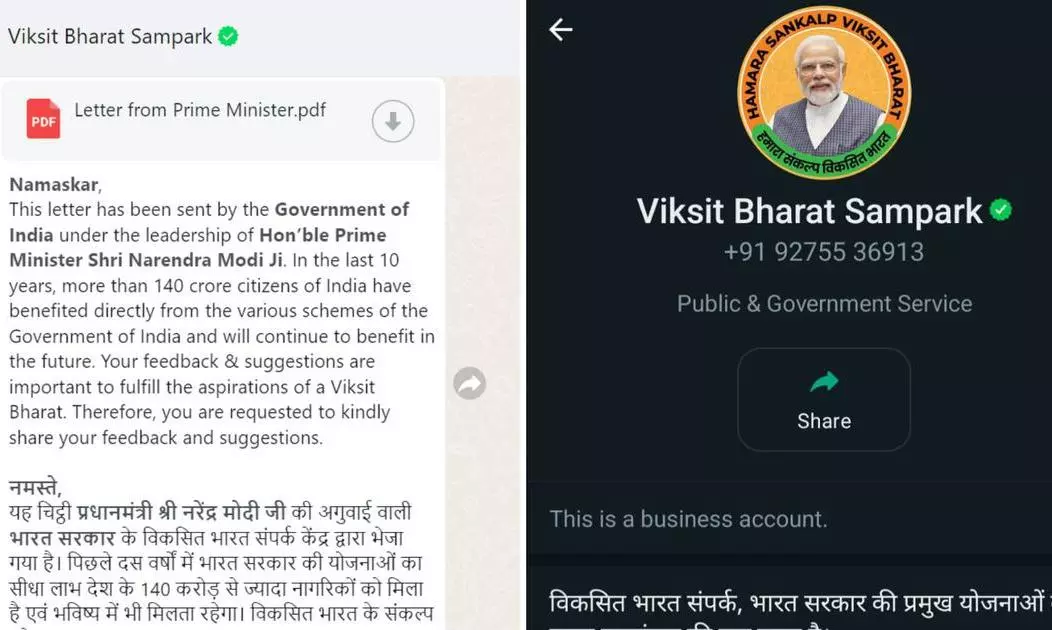

In response to alleged violations of the Model Code of Conduct (MCC), the Election Commission (EC) has directed the Union Ministry of Electronics and Information Technology (MeitY) to immediately cease the distribution of Prime Minister Narendra Modi's letters via WhatsApp.
The directive comes following complaints that messages from the account "Viksit Bharat Sampark" were still reaching citizens' phones despite the commencement of MCC regulations.
The EC, in a letter addressed to the Secretary of MeitY, has demanded a prompt compliance report and emphasized the urgency of halting further dissemination of WhatsApp messages during the MCC period.
The Ministry had previously informed the EC that while the messages were dispatched before the MCC period began, technical constraints might have caused delayed delivery to some recipients.
This development comes after the Trinamool Congress raised concerns over the alleged breach of MCC protocols. TMC MP Saket Gokhale highlighted the timing of the messages, asserting that a significant portion reached recipients after the MCC took effect on March 16, the day of the Lok Sabha elections announcement. Gokhale's letter to MeitY Secretary S. Krishnan questioned the distribution database and criticised the messages' content as blatant propaganda for Modi and the BJP.
"The message contained a letter from PM Modi & was open and unabashed propaganda and marketing for Modi & the BJP. Here’s the catch: thanks to the usual incompetence of the Modi Govt, a majority of these messages were received by people AFTER 4:30 pm on 16th March. This is the time when the election Model Code of Conduct came into force," Gokhale emphasized.
The revelation of messages reaching recipients after the MCC came into effect has fueled allegations of a violation. The EC's intervention underscores the seriousness with which it views any potential infringements on MCC regulations. With elections looming and campaigning intensifying, the EC's directive aims to maintain a level playing field and ensure fair electoral practices.