













Centre says gay marriage rights reflect urban elitist views, CJI says "no data to back" the claim
text_fields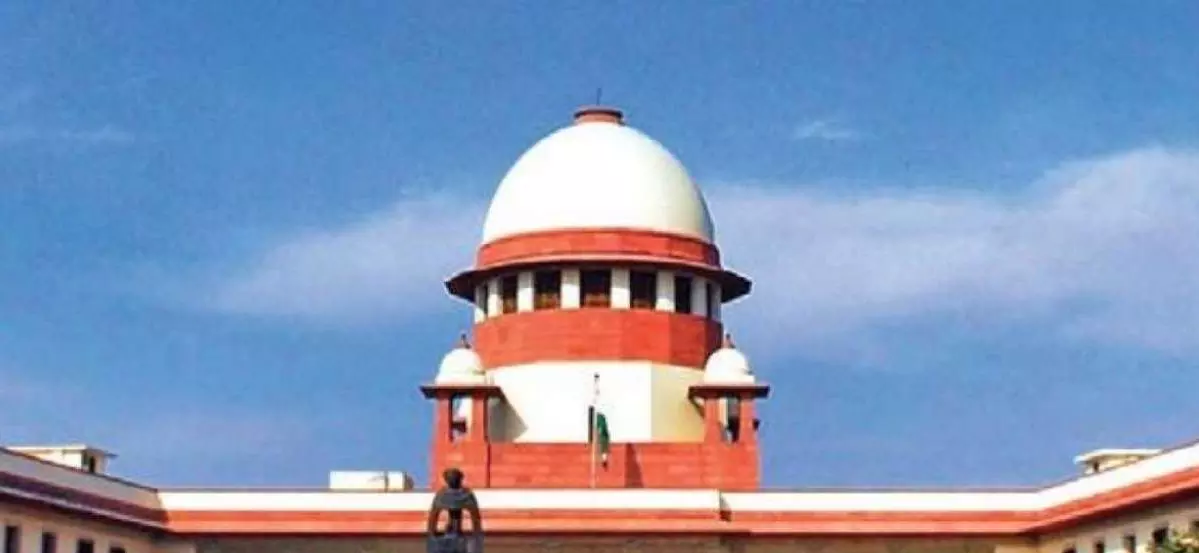

New Delhi: After the Centre argued against legalising gay marriages saying that it is an "urban elitist concept", Chief Justice of India DY Chandrachud said that same-sex marriages cannot be termed as such just because more people from cities are coming out of the closet.
The Supreme Court today heard the arguments seeking legal sanctions for gay marriages. The centre's submission regarding the petition was that the petitions seeking gay rights do not represent the views of the nation and that they only reflect "urban elitist views".
The CJI remarked that the Centre does not have any data to back its argument. "State cannot discriminate against an individual on the basis of a characteristic over which the individual does not have control. When you see it as innate characteristics, then it counters (argument of) the urban elitist concept... urban perhaps because more people are coming out of the closet. The government does not have any data also to show that same-sex marriage is an urban elitist concept."
Senior Advocate Mukul Rohatgi appeared for the petitioners and said that the notion of heterosexuality must be deconstructed and the Constitution grants fundamental rights to all individuals, heterosexual or queer. "There was no reason why they should be denied the right to marriage. We will not be treated as lesser mortals and there will be full enjoyment of the right to life."
The bench comprising Justice SK Kaul, Justice Ravindra Bhat, Justice Hima Kohli, and Justice PS Narasimha is hearing the arguments. It is headed by the CJI.
The Centre is against the top court hearing the matter and has been arguing that only the legislature can decide the creation of a new social relationship. It also said that the definition of marriage should not be negated by judicial order because the social consensus favours a particular definition of marriage.
"The competent legislature will have to take into account broader views and voice of all rural, semi-rural and urban population, views of religious denominations keeping in mind personal laws as well as and customs governing the field of marriage together with its inevitable cascading effects on several other statutes," said the centre.