



















KAUST advances synthetic data tools for environmental disaster monitoring
text_fields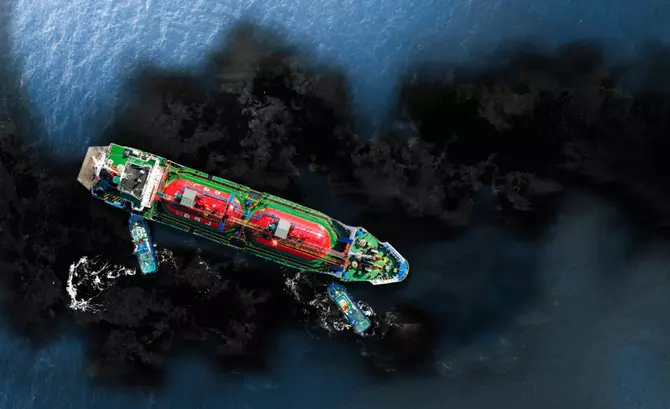

King Abdullah University of Science and Technology and Saudi Earth observation company SARsatX are working on the use of computer-generated data to improve artificial intelligence systems used to detect oil spills.
The collaboration focuses on creating synthetic datasets that can be used to train deep learning models, addressing gaps in the availability of real-world environmental data. KAUST said verifying the reliability of synthetic data is essential for monitoring environmental incidents, where early detection can limit damage and improve response times.
Matthew McCabe, dean of KAUST’s Biological and Environmental Science and Engineering Division, said environmental AI projects often face limitations due to the lack of sufficient high-quality training data. He noted that this constraint affects the accuracy and reliability of predictive models.
McCabe explained that deep learning techniques can generate synthetic data from small amounts of real information, allowing researchers to expand datasets without relying on extensive field collection. These datasets can then be used to train AI systems designed to identify oil spills more effectively.
The project aims to strengthen marine protection efforts by enabling faster and more dependable monitoring, while also reducing the operational and environmental costs linked to large-scale data collection.