











SC frowns on EC formation method weighted in favour of executive
text_fields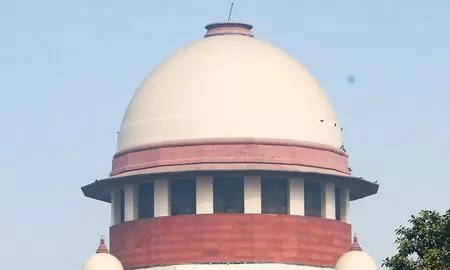

New Delhi: The Supreme Court on Thursday questioned the Centre’s law for appointing the Chief Election Commissioner and Election Commissioners, saying the current selection process gives the executive effective control and reduces the Leader of the Opposition’s role to a “show of independence.”
A bench of Justices Dipankar Datta and Satish Chandra Sharma heard petitions challenging the constitutional validity of the Chief Election Commissioner and other Election Commissioners (Appointment, Conditions of Service and Term of Office) Act, 2023. The judges asked why the selection committee created by the law — comprising the Prime Minister, the Leader of the Opposition in the Lok Sabha and a Union Cabinet minister nominated by the Prime Minister — did not include any independent member.
The bench emphasised that an independent Election Commission of India (ECI) is essential to preserve free and fair elections, which are part of the Constitution’s basic structure. “For a CBI Director, the CJI is there. We can say for the maintenance of law and order. Or you can stretch it to the rule of law also. But not for maintaining democracy? Not for ensuring pure elections?” the court observed, while clarifying it was not insisting that the Chief Justice of India be on the panel.
“But why shouldn’t there be an independent member?” the court asked, noting that the three-member panel’s practical functioning was questionable. In cases of disagreement between the Prime Minister and the Leader of the Opposition, the nominated cabinet minister would likely back the government, the bench said, making the LoP’s presence largely ornamental.
“What troubles us prima facie is why there is an executive veto?” the judges added, warning that inclusion of the Leader of the Opposition would be meaningless if outcomes are effectively predetermined. The bench stressed that the ECI must not only be independent but also appear independent.
The court said it was not prescribing legislative policy but examining whether the 2023 law complies with constitutional standards under Articles 14 and 324. In March 2023, a Constitution Bench had recommended that appointments be made by the President on advice of a panel including the Prime Minister, the Leader of the Opposition and the CJI, as an interim measure until Parliament legislated. Parliament then enacted the 2023 law, replacing the CJI on the panel with a Union minister. In March 2024, the Supreme Court had declined to stay appointments made under the new law while considering challenges to its validity.
(Inputs from IANS)