












Mumbai lab develops world's first Silicosis rapid test kit
text_fields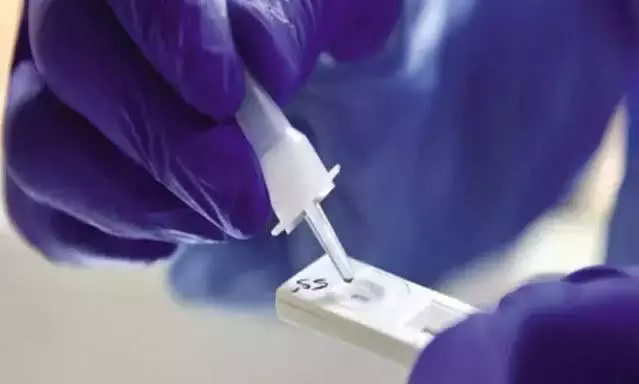

Mumbai: For a first in the world, researchers developed a rapid test kit for Silicosis, a progressive lung disease caused by exposure to silica, Times of India reported.
The invention results from a collaboration between the Mumbai team of the National Institute of Virology (NIV) and the National Institute for Occupational Health.
The kit, named a point of care test, is similar to a pregnancy test kit. It detects the levels of serum CC16 in blood. Based on the concentration of the serum, the intensity of the disease a patient has is diagnosed, Dr Shyam Sundar Nandi of the Mumbai laboratory and one of the researchers in the team said. If the value of serum CC16 is between 6 and 9 ng/ml, it is earlier Silicosis.
Nandi said that India has a high burden of Silicosis with an estimate of 1.25 crore patients at the moment. Every day, eight-core people are exposed to silica in India alone, he said. But, the disease is usually diagnosed at an advanced stage, and nothing much can be done to prolong the patient's life.
Nandi further said that most patients develop tuberculosis (TB), and it could affect the TB control programme. India aims to eliminate TB by 2025, but it would not be possible if Silico-Tuberculosis and Silicosis are not controlled, Nandi added.
The Indian Council of Medical Research, NIV's parent body, has transferred the technology to two firms in Delhi and Chennai while the Union government plans to make the test mandatory for industries, involving silica dust exposure, twice a year for its staff.