
















Engineers develop artificial neurons that mimic human brain functions
text_fields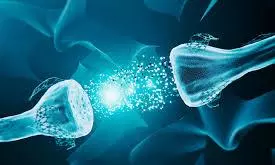

Engineers at the University of Massachusetts have created the first artificial neurons capable of communicating with living cells.
These neurons replicate the electrical functions of biological ones, bringing them closer to natural brain cells.
The innovation builds on previous work where researchers used protein nanowires synthesised from bacteria that generate electricity. The new development could lead to computers operating on biological principles and interacting directly with living cells in the human body.
According to Shuai Fu, lead author of the study published in *Nature Communications*, the human brain processes massive amounts of data while consuming very little power compared to electrical computers. Fu explained that although the brain handles extensive information, its energy usage is considerably lower than that required to run a large language model (LLM) like ChatGPT. He highlighted the brain’s unmatched efficiency, noting that it consumes only about 20 watts to write a story, whereas an LLM may require over a megawatt.
Jun Yao, senior author of the paper, highlighted the efficiency of the new artificial neurons. He explained that compared to earlier artificially developed neurons, which required 100 times more power and 10 times more voltage to improve efficiency, the new neurons consume only 0.1 volts, similar to the human body.
The artificial neurons have the potential to transform the energy efficiency of electronic devices. They could allow computers to connect directly with the human brain without amplification. In addition, these bio-films could be powered by human sweat and detect diseases through smell, opening possibilities for advanced medical and technological applications.