


Women’s Forum calls for renewed commitment to peace, justice and social harmony
text_fields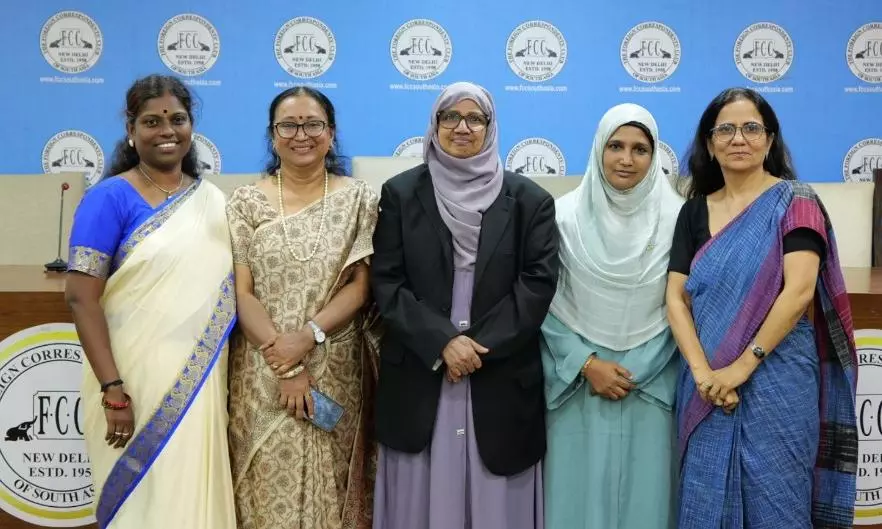
Office Bearers, from left to right: Ms. Abirami Jotheeswaran, Secretary; Ms. Jagriti Rahi, Chairperson; Ms. Rahamathunnisa A, Vice Chairperson; Dr. Rabia Basri, General Secretary; and Ms. Binny Yadav, Media Advisor.

A call for renewed commitment to peace at a time when people are divided into categories, along with a demand for meaningful action against social injustices, identifying the gaps and pursuing action in areas where the dignity of women is questioned, was the defining message of the inaugural ceremony of the National Women’s Forum for Peace and Harmony (NWFPH).
The Forum was formally launched on 19 August 2026 at the Foreign Correspondents’ Club of South Asia, New Delhi, bringing together women leaders, academics, intellectuals, students, journalists and representatives from diverse fields, with the event, held on World Humanitarian Day, seeking to establish a collective platform for advancing peace, justice, inclusion, women’s empowerment and nation-building.
The event witnessed veteran activist and educationist Dr Roop Rekha Verma, former Vice-Chancellor of Lucknow University, as the Chief Guest, while senior journalist Bhasha Singh, Bharti Nagpal, Director of New Delhi YMCA IMSIT, and Beena J. Pallical, General Secretary of the Dalit Arthik Adhikar Andolan (DAAA), attended as Guests of Honour.
The programme opened with a welcome address by Abhirami, Secretary of the Forum, followed by the introduction of its Executive Committee by General Secretary Dr Rabia Basri. The Forum’s logo was also unveiled, depicting women’s hands releasing a dove — a symbol of women as bearers and forerunners of peace and their collective aspiration to let peace “fly high” across society.
Addressing the gathering, Chairperson Jagrati Rahi called for a renewed commitment to peace and harmony through the principles of Sarvodaya and the teachings of Mahatma Gandhi. She said Gandhian values continue to provide moral direction even in the most difficult times.
Vice Chairperson Rahmathunnisa said the Forum sought to identify social gaps and move beyond merely raising concerns towards developing practical solutions and enabling social transformation.
Dr Verma urged the Forum to remain inclusive and representative by bringing together people across genders, communities and social classes, while Bhasha Singh stressed the need to recognise “fascist” forces that seek to divide society along communal lines, underlining the importance of independent journalism and collective action in protecting democratic values.
Beena J. Pallical emphasised stronger Dalit leadership and representation in politics, institutions and positions of authority, while Delhi University student leader Anjali called for greater attention to students’ concerns, education, opportunities and democratic participation.
Prof Nandita Narain highlighted education, particularly primary education, as fundamental to nation-building. Media adviser Binny Yadav said the Forum’s vision extended beyond the conventional notion of “for women, by women and of women”, seeking instead to address wider humanitarian and social challenges.
Referring to the 17 UN Sustainable Development Goals and their 2030 targets, Yadav stressed that issues such as education, health, infrastructure, environmental sustainability and climate change affect everyone, with women often bearing a disproportionate burden.
The ceremony concluded with Dr Basri reaffirming the Forum’s commitment to translating dialogue into meaningful action for peace, justice, dignity, inclusion, women’s empowerment and sustainable nation-building.