


















Israel violates ceasefire agreement, cuts humanitarian aid to Gaza by half
text_fields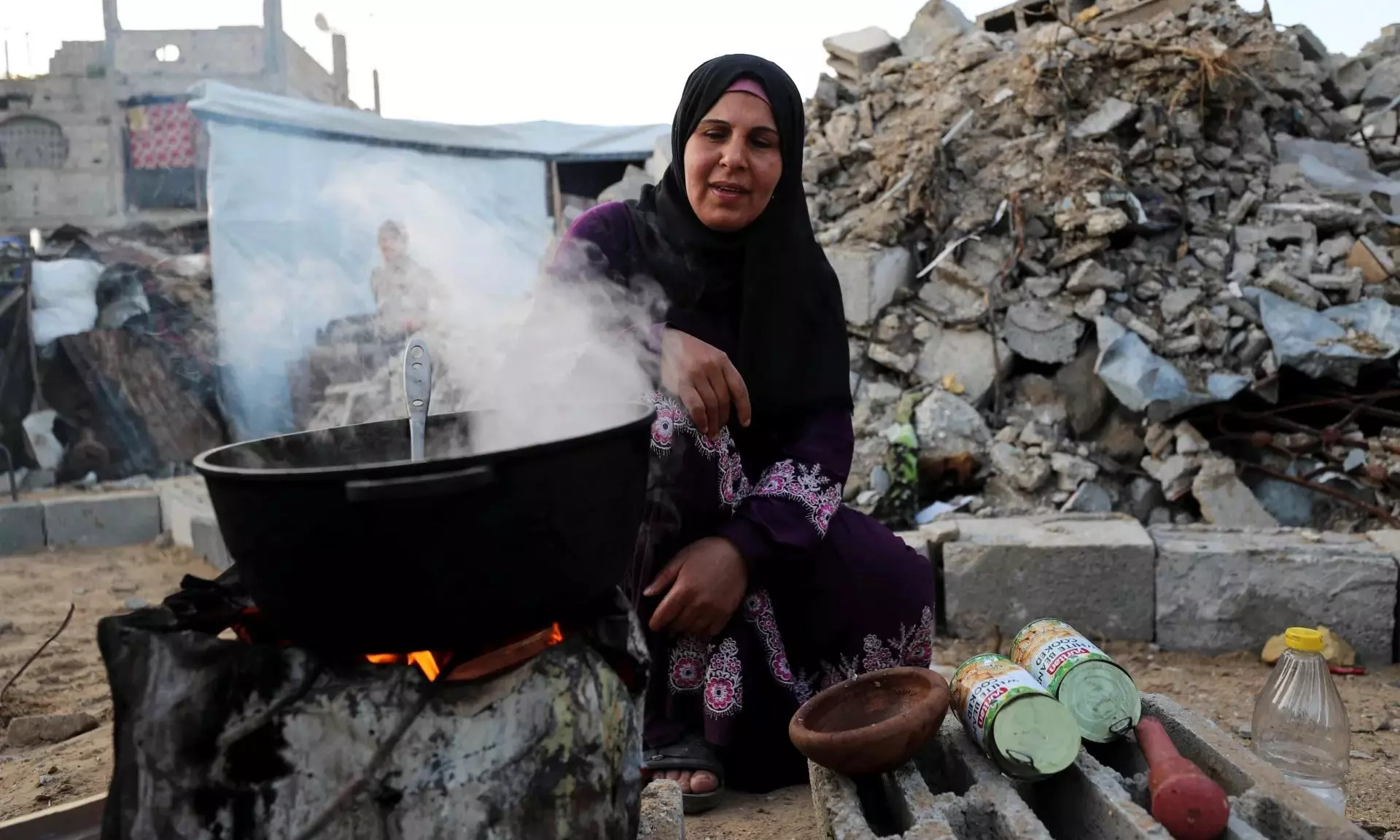

Israel appeared to violate the ceasefire agreement in Gaza on Tuesday by cutting the flow of humanitarian aid to the besieged enclave and postponing the reopening of the Rafah border crossing with Egypt, accusing Hamas of delays in returning the bodies of Israeli hostages.
The move, seen as the first major test of the fragile truce brokered by former US president Donald Trump, immediately raised tensions and drew concern from humanitarian agencies struggling to deliver relief to Gaza’s devastated population.
The Israeli government announced that only 300 aid trucks would be allowed to enter Gaza daily, halving the number previously agreed under the ceasefire deal, while the Rafah crossing—expected to reopen on Wednesday—remained closed.
Officials in Jerusalem attributed the decision to what they described as Hamas’s failure to meet its commitment to return the remains of hostages within the 72-hour window stipulated in the 20-point truce plan.
Hamas, however, said it was facing obstacles as not all burial sites had been located, while the International Committee of the Red Cross acknowledged that retrieving bodies buried under Gaza’s rubble posed a significant logistical challenge.
By Tuesday night, the militant group had handed over the remains of four additional hostages, bringing the total to eight since the ceasefire came into effect, leaving twenty still unaccounted for. Israel’s reaction nevertheless marked a breach of the agreement, which had been designed to enable the release of all captives, both living and deceased, alongside a partial Israeli withdrawal and a surge in humanitarian assistance.
The truce, which facilitated the freeing of 20 Israeli hostages and nearly 2,000 Palestinian detainees, appeared increasingly fragile as violence flared across Gaza. Israeli troops, who had recently withdrawn from several urban areas, reportedly opened fire on civilians approaching their positions in two separate incidents, killing six people.
The Israeli military said the victims were perceived as threats, while Hamas accused Israel of breaching the ceasefire terms and attempting to evade its commitments to international mediators.
Amid the continuing tension, reports emerged of Hamas fighters returning to the streets of Gaza to reassert control, with several incidents of summary executions of suspected collaborators. Israel has yet to respond publicly to this development, although its officials maintain that any lasting settlement must include the disarmament of Hamas.
Meanwhile, humanitarian officials expressed alarm at the suspension of aid deliveries, noting that supplies of food, medicine, and shelter materials had scarcely improved since the ceasefire began. The United Nations estimated that reconstruction would cost around $70 billion, with 55 million tonnes of debris littering Gaza—an amount compared to the weight of thirteen Egyptian pyramids.