
















Italian bank probed Vinod Adani associates, found suspicious hedge fund holdings
text_fields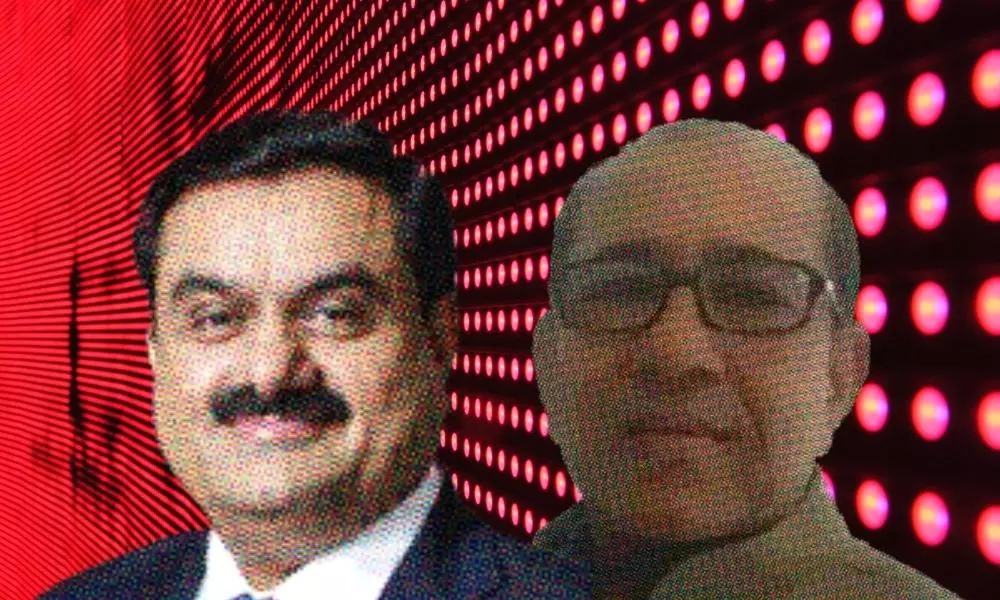

On the heels of Hindenburg Research’s report in January 2023, Italy’s biggest bank Intesa Sanpaolo had reportedly investigated two associates of Adani Group chairman Gautam Adani’s brother, Vinod Adani, and found Chang Chung-Ling, a Taiwanese businessman, and Nasser Ali Shaban Ahli from the UAE held USD 1 billion and USD 2 billion, respectively, in hedge funds with underlying assets “likely” invested in Adani companies.
A report published by the Financial Times on Tuesday stated that the Italian lender initiated its internal probe after the US short seller Hindenburg Research levelled allegations of stock price manipulation, insider trading and other financial improprieties against the conglomerate, thereby prompting compliance officials to scrutinise clients with perceived proximity to the Adani network.
The investigation, which followed the bank’s discovery that the Dubai branch of the Swiss private bank Reyl and Cie — acquired by Intesa in 2020 — maintained three clients introduced through the same “business introducer”, namely Vinod Adani, Chang and Ahli, culminated in meetings with the two associates, who signed statements repudiating the accusations contained in the Hindenburg dossier; however, notwithstanding their denials, the bank reportedly flagged suspicious activity and imposed restrictions upon their accounts.
According to the internal memo cited by the Financial Times, the substantial hedge fund holdings existed the day after the Hindenburg report was released, and senior Intesa officials recorded that both Chang and Ahli acknowledged control over the accounts engaged in the transactions while asserting that their wealth stemmed from professional pursuits and that their investments in Adani-linked entities were grounded in confidence in the family’s business acumen.
The article further observed that the transactions assume significance because they appear to buttress Hindenburg’s contention that associates covertly held Adani stock, potentially contravening regulatory safeguards designed to prevent insiders from manipulating market prices; moreover, the memo is said to note that Chang’s account interacted directly with Vinod Adani’s, albeit for sums characterised as “not particularly significant”.
The Financial Times reported that documents were shared by the Organised Crime and Corruption Reporting Project, and it reiterated that the Adani Group, described as India’s largest private thermal power producer and port operator, has emphatically denied any wrongdoing even as regulatory and journalistic scrutiny persists.