Turbulence in Iran
text_fields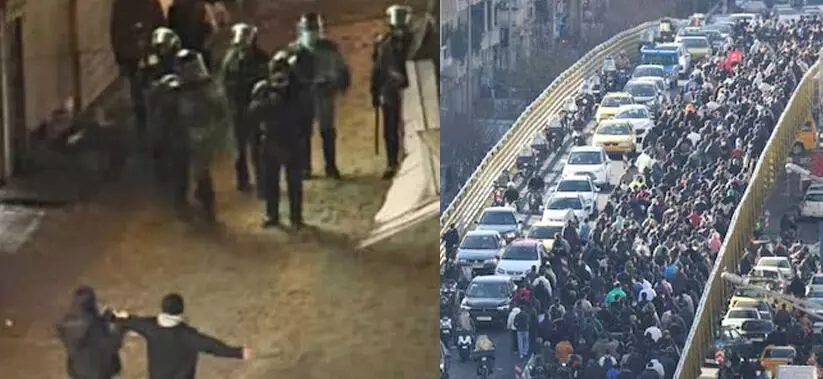

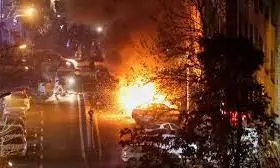
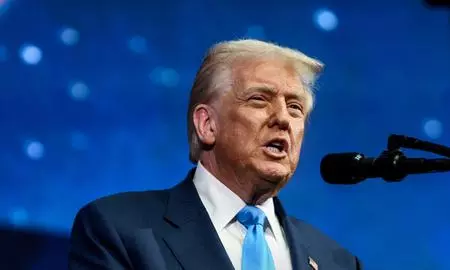
A popular uprising that began in late December last year in the Islamic Republic of Iran against unprecedented inflation and shortages of essential commodities is still continuing, leading to massive loss of life and widespread unrest. Although accurate information about casualties is not available due to the lack of internet access, one estimate that has emerged says that 109 security personnel and 544 civilians have already been killed. News reports indicate that the sharp depreciation of the Iranian rial has made everyday life unbearably difficult for the people. At the beginning of 2025, one US dollar was valued at seven lakh rials; by mid-year, it had fallen to nine lakh, and when it plunged further to 14 lakh rials by Monday, needless to say, the prices of essential goods soared sky-high. It was only natural for ordinary people to take to the streets when food prices shot up by 72 per cent compared to the previous year. The United Nations Security Council’s decision in September 2025 to continue economic sanctions against Iran over allegations of nuclear enrichment, along with the 12-day war fought with Israel in June 2025, are the main reasons for the country’s economic collapse. Although Iran succeeded in thwarting Israel’s airstrikes targeting its nuclear facilities, it had to endure heavy damage as a consequence, further deepening the collapse of its economy. Responding to the threat by US President Donald Trump that the United States would intervene militarily if the policy of suppressing the protests continued, Iranian Foreign Minister Abbas Araghchi has said that Iran is prepared both for war and for negotiations. Reports are also circulating that the possibility of a settlement has opened up with Oman acting as a mediator. Trump, too, has said that Iran has conveyed its willingness to engage in talks.
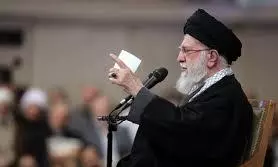
At a time when no one can be certain how far Trump’s words can be trusted, the world is watching with anxiety to see whether the already volatile West Asian situation will culminate in an even more devastating war. But past events do not permit any one to discount the Iranian allegation that the current revolt is a devious attempt of the US to engage militarily in Iran. After all, the world witnessed how Israel, with the direct support of the US, rained fire for more than two years to drown in blood the struggle launched by Hamas in Gaza for the independent existence of its homeland. At that time, it was an all too clear fact that the only country that stood by Hamas was the Islamic Republic of Iran. While others merely paid lip service to peace, none dared to come to the aid of Palestine or Gaza. When the revenge-driven Zionist state unleashed attacks against Iran with Trump’s cooperation, that country managed to shock Israel by firing ballistic missiles at Tel Aviv. Since then, the United States and Israel have been jointly making moves to overthrow the current government in Iran and install a puppet regime of their own. Seen in this light, the allegation by Ayatollah Khamenei and the Iranian leadership that the present internal unrest in Iran is part of that design, cannot be dismissed outright. At the same time, Iran’s diplomacy, maintaining close ties with Russia and China, has also been unsettling the Yankee–Zionist axis. The US conspiracies to reclaim Iran from the successors of Ayatollah Khomeini, who came to power through a popular revolution in 1979 after toppling the US-backed Mohammad Reza Shah Pahlavi, have now begun to surface openly.
The re-emergence of the deposed Shah’s son, Reza Pahlavi, as a new face on the political stage and his declaration of support for the street protests stand as clear evidence of this. However, the firm position of Iran’s popular government under the leadership of its supreme spiritual leader, Ayatollah Khamenei, is that this cannot be accepted under any circumstances. Democratic and peaceful protests and agitations certainly have relevance and moral justification, and bringing down governments that have lost popular support through such means is not in itself illegitimate. But interfering in the internal affairs of a sovereign nation through malicious moves, engineering coups, and issuing threats of war are violations of internationally accepted norms of relations between states and of the principles of the United Nations. It must also be remembered that this is a moment when the Indian government should openly express its sense of obligation and goodwill towards Iran, a country that has maintained friendly relations with India throughout history.