













Amid SC defeat, Trump signs 2 executive orders to narrow birthright citizenship
text_fields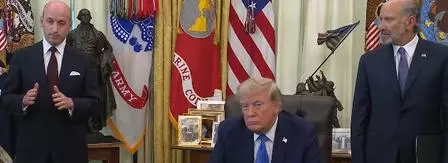
Photo: IANS

Washington: Following the Supreme Court's decision to overturn the administration's previous order, US President Donald Trump signed two executive orders to restrict birthright citizenship.
"We had a very unfortunate decision in the Supreme Court concerning birthright, it was close," Trump said in the White House Oval Office as he signed the new orders. "So we're making adjustments."
One of the orders targets "birth tourism," which is defined as the entry of any foreigners into the United States via a nonimmigrant visa for the purpose of giving birth on US soil, or any effort by any foreigners to facilitate such entry, according to the White House, IANS reported.
The other order expands the definitions of people ineligible for birthright citizenship, including children of foreign government employees, children of members of a designated Foreign Terrorist Organization, as well as children of people who engaged in fraudulent activity to obtain citizenship, Xinhua news agency reported.
The 14th Amendment of the US Constitution, ratified in 1868, states that "all persons born or naturalised in the United States, and subject to the jurisdiction thereof, are citizens of the United States and of the state wherein they reside."
On January 20, 2025 -- the inauguration day of his second term -- Trump signed an executive order regarding birthright citizenship. The order declares that children born of persons unlawfully or temporarily present in the United States are not "subject to the jurisdiction" of the United States, and thus do not qualify for citizenship under the 14th Amendment or the Immigration and Nationality Act.
Several parents filed suit, some on their own behalf, and others on behalf of their children. Multiple lower courts had ruled in favour of the plaintiffs, and the executive order never took effect.
On June 30, the Supreme Court -- by a 6-3 vote -- rejected Trump's executive order denying birthright citizenship to children of undocumented immigrants or temporary residents, upholding birthright citizenship.